
This morning, we docked at a place called Riol. I’m not sure if that’s the actual name of a town or a truncated version of the dock-adjacent trailer park/campground named Triolago. But, as the name implies, there are three lakes.
We are docked just a short bus ride outside of Trier.
At 9 AM, each group boarded their respective bus and we were off to tour Germany’s oldest city. Along the way, we spotted 1) two old treadwheel cranes (as in winches, not birds) once used to unload cargo shipped on the Mosel; 2) the largely-original Roman bridge, the oldest bridge north of the Alps still in use; and 3) the ruins of both the Imperial Baths (impressive) and the Barbara Baths or Barbarathermen (unfinished).
Trier was founded by the Celts and conquered by the Romans. It became one of the four capitals of the Roman Empire during the Tetrarchy period in the late 3rd and early 4th centuries. The city is also home to most of the best Roman ruins in Germany.
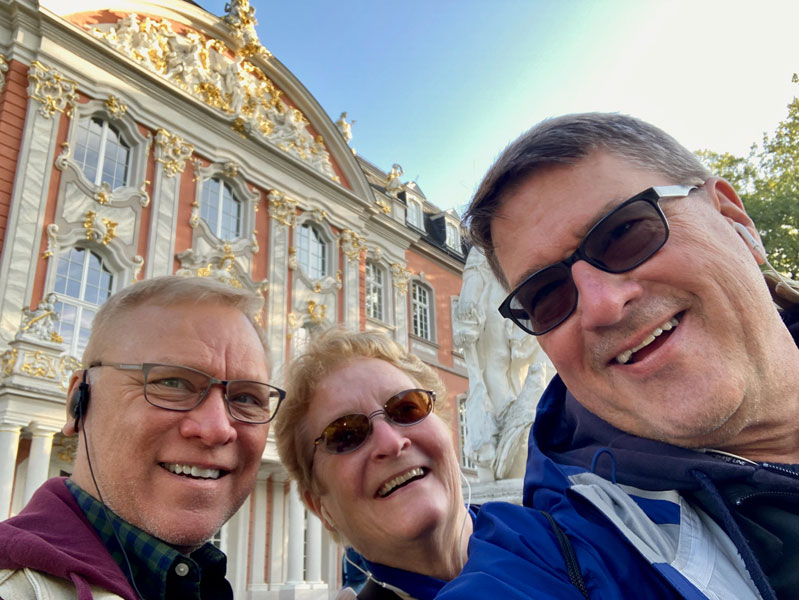
We started our tour at the Electoral Palace (or Kurfürstlicher Palast). Once home to the the Archbishopric of Trier, the resident bishop was recognized as a prince-elector of the Holy Roman Empire, a very powerful position for the time.
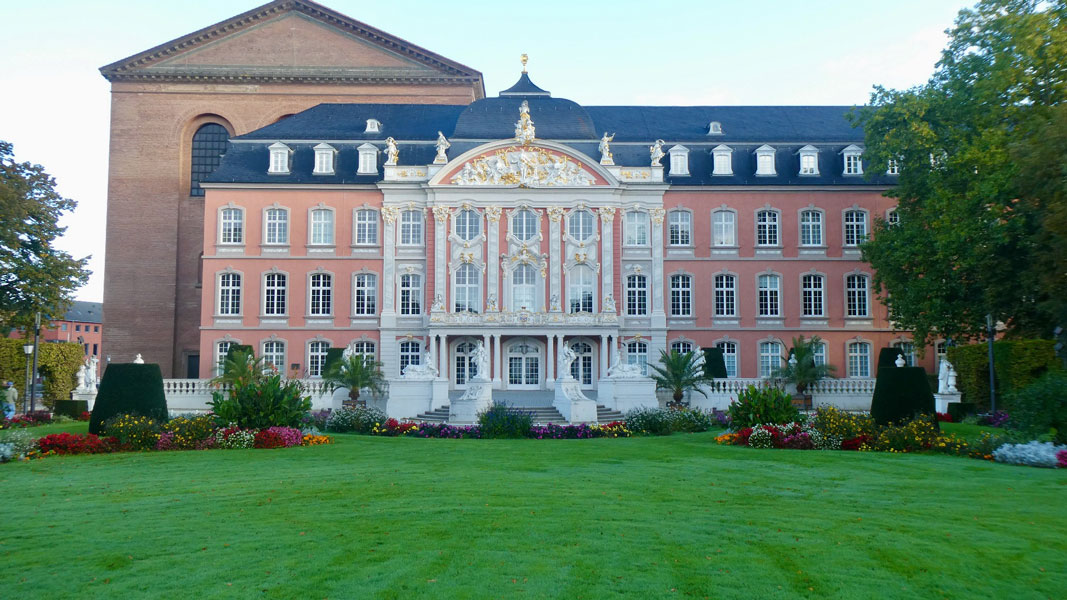
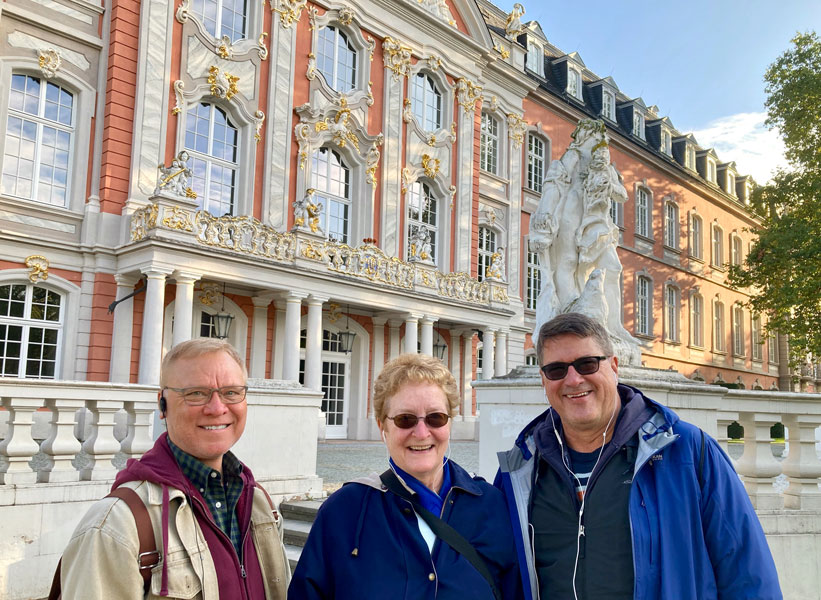
Attached to the Electoral Palace is the Aula Palatina, a basilica in the Roman sense of the word, that was the throne room for the Emperor Constantine. It’s external simplicity contrasts with the flamboyant excess splashed in pink and gold across the palace facade. (It also bears a resemblance to the industrial building I noted on my morning walk from Strasbourg to Germany earlier in the trip.)
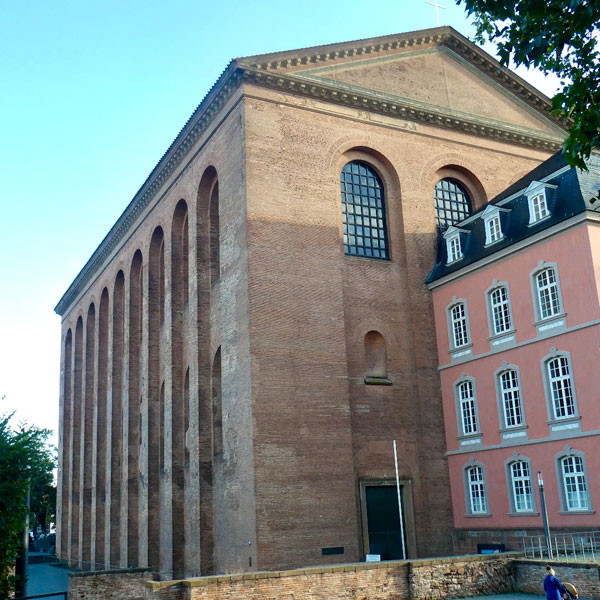
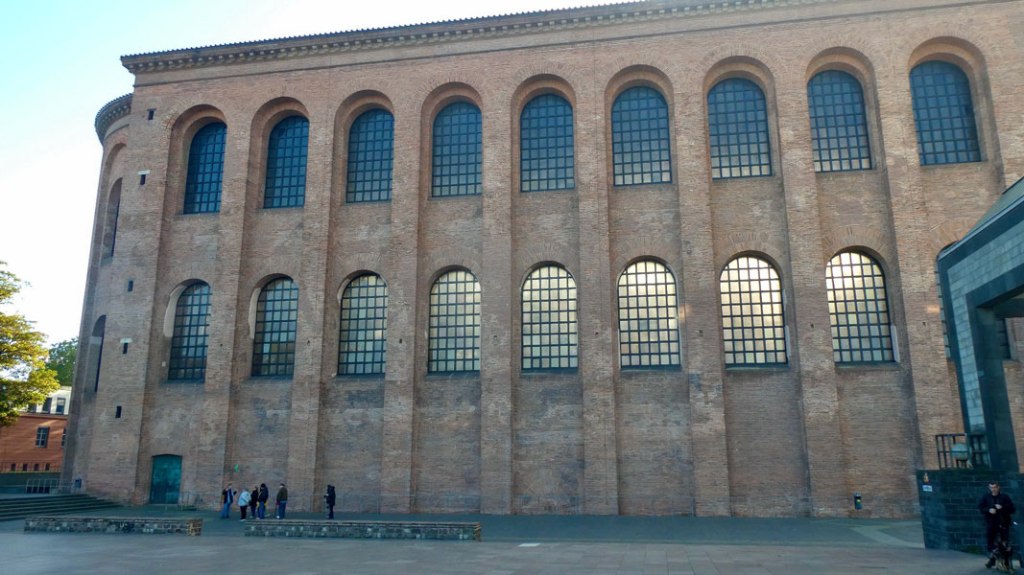
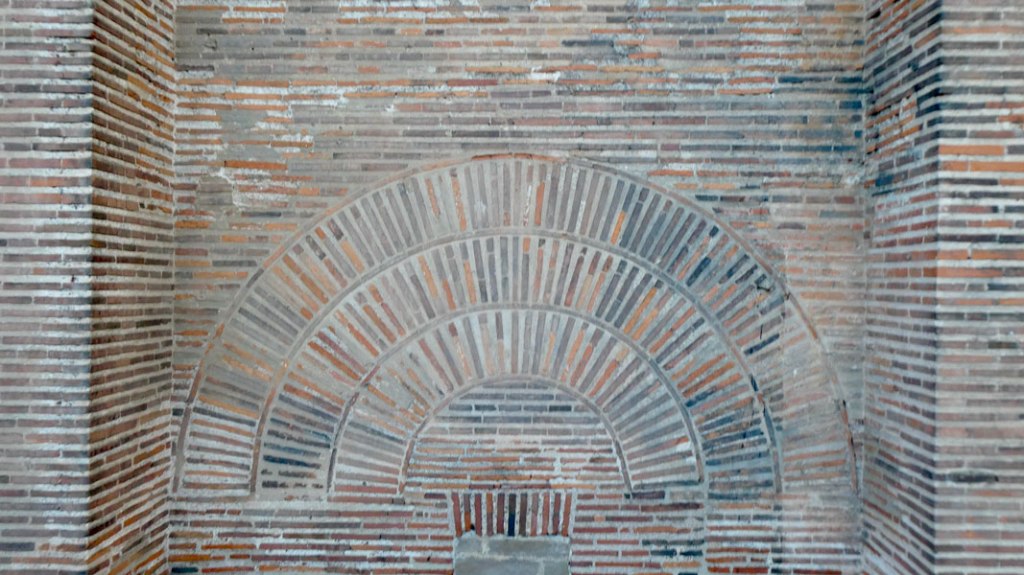
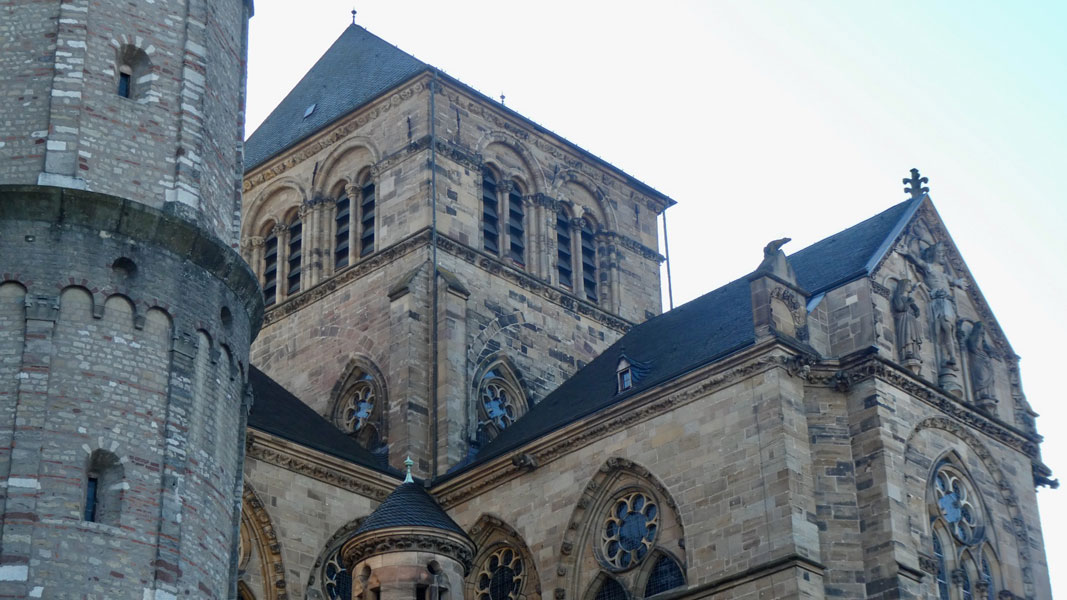
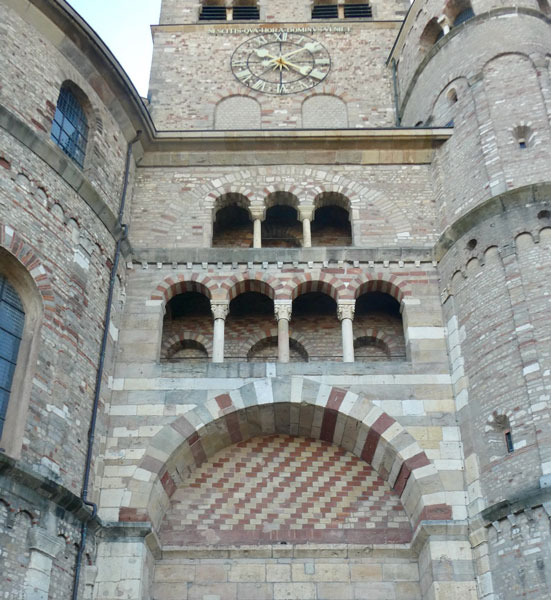
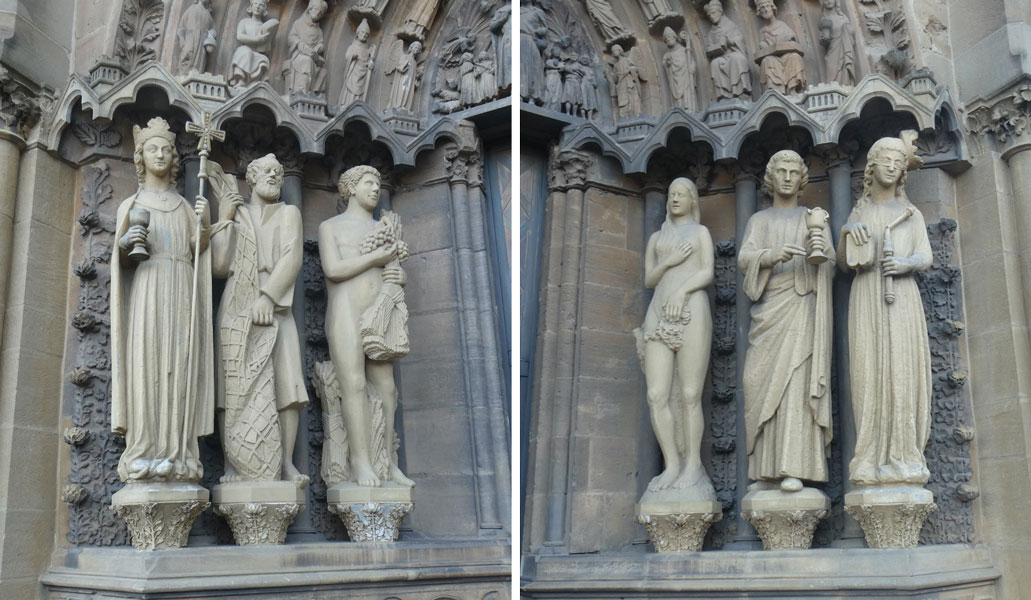
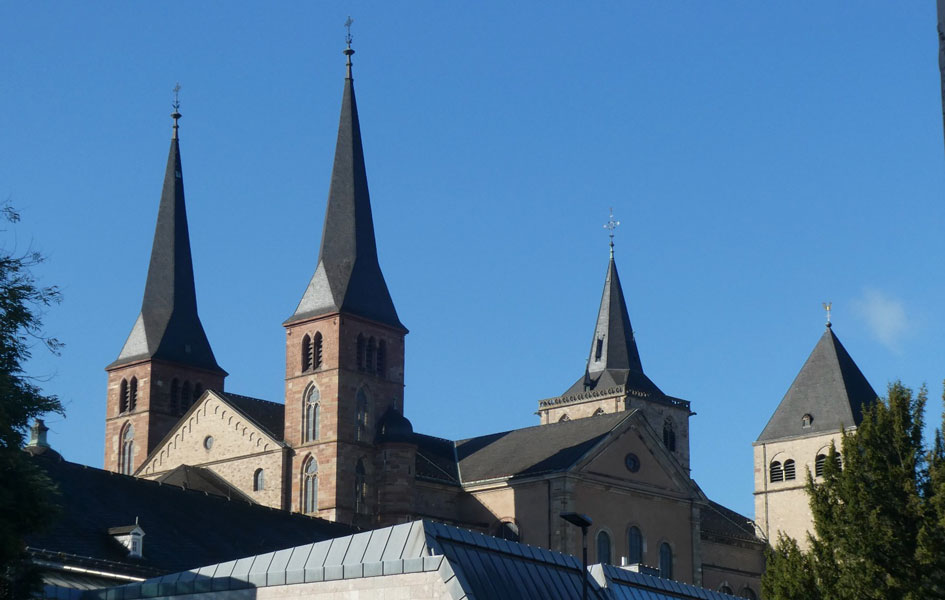
Our next stop was the Trier Dom (or Cathedral of St. Peter). Unfortunately, as it was Sunday morning, mass was being held and visitors were verboten. So no interior pics.
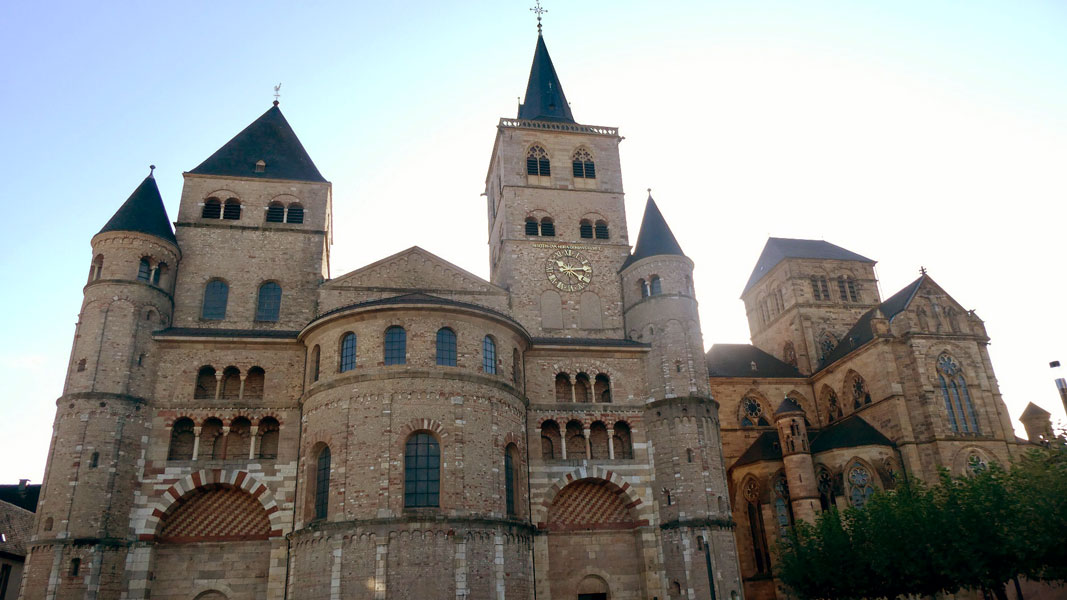
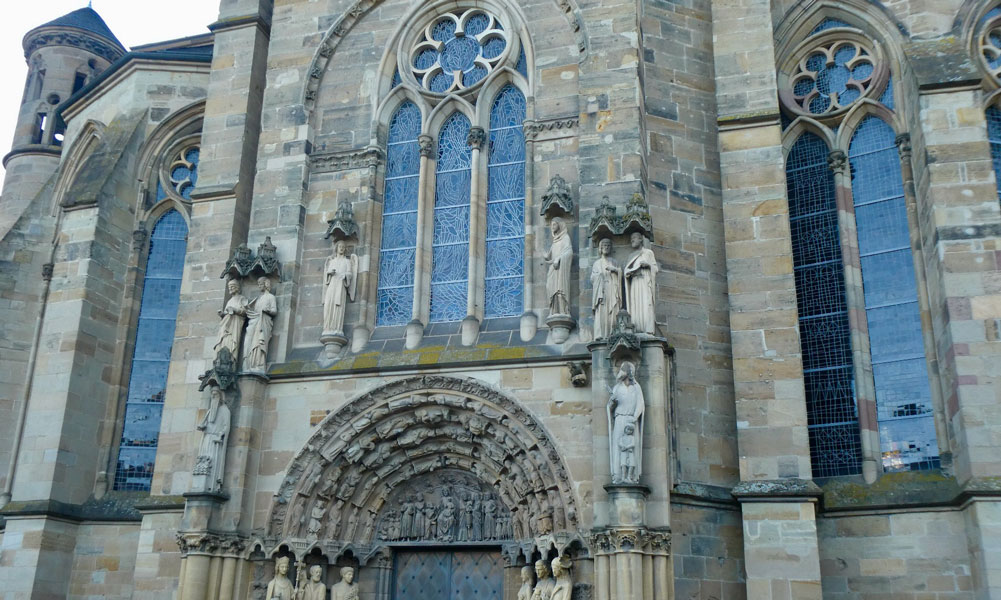
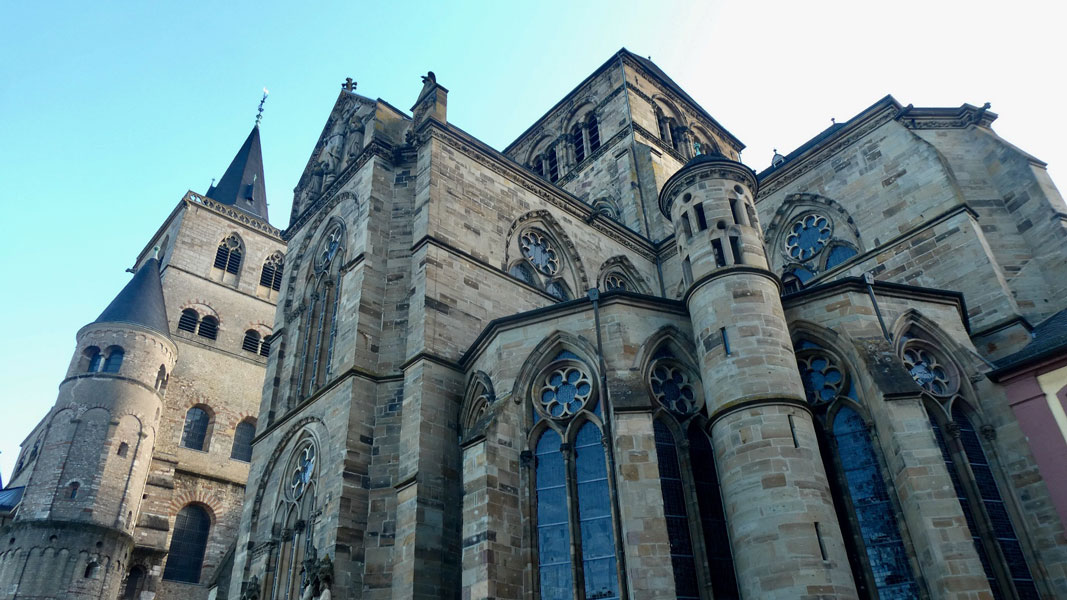
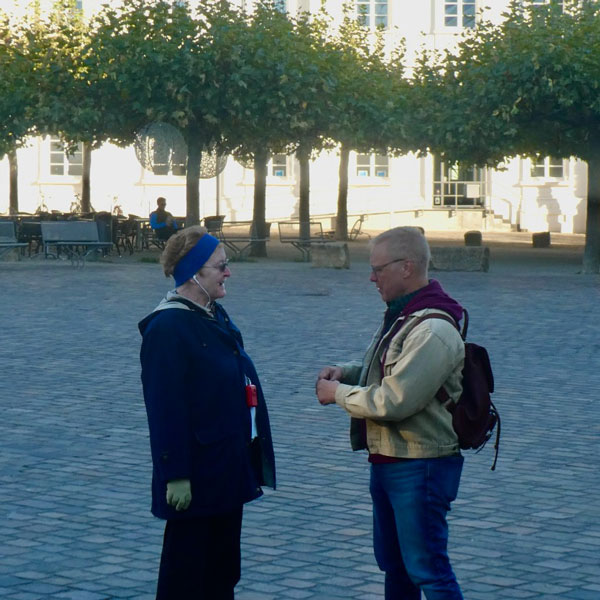
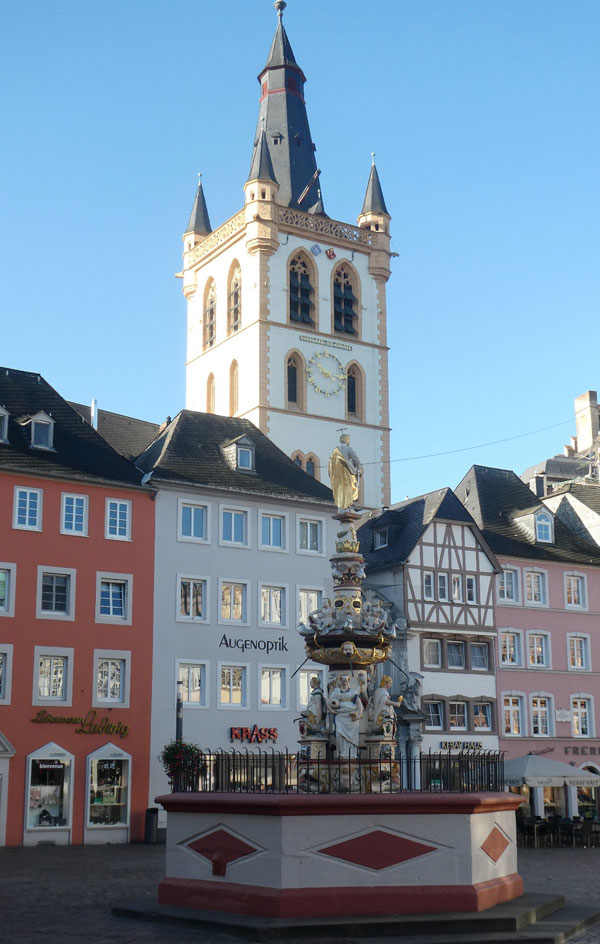
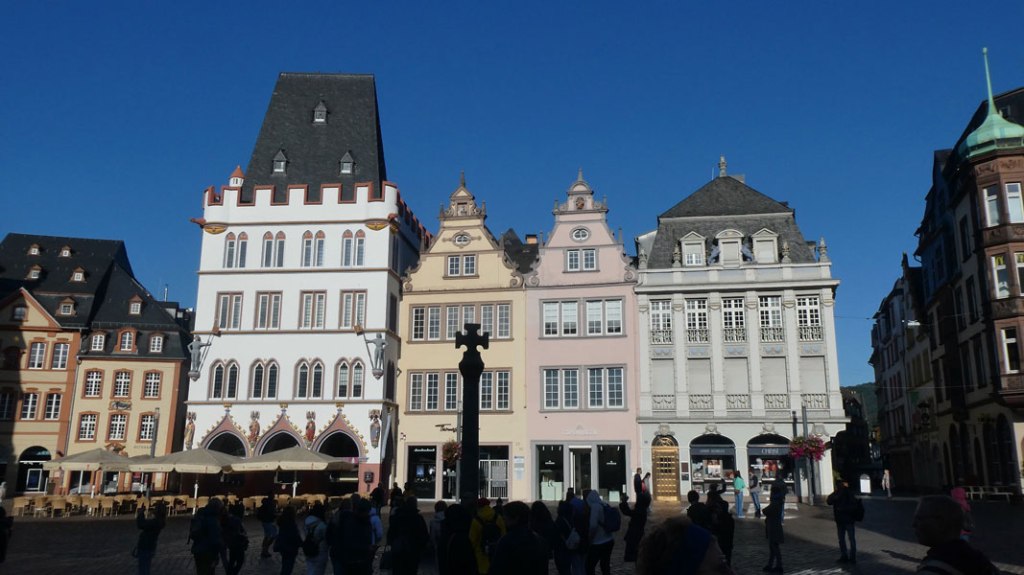
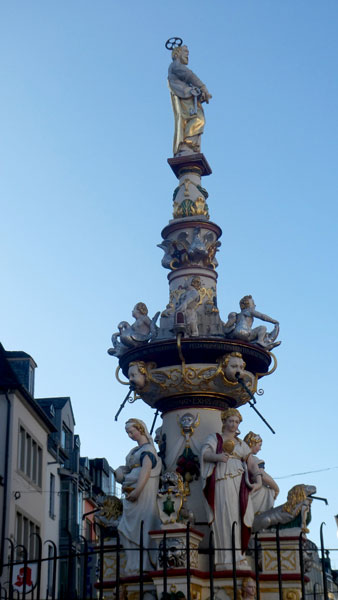
Leaving the cathedral vicinity, our group was led to the main Market Square (Hauptmarkt) which was lined with period buildings and mostly closed shops (because it was Sunday.) One exception was a corner wurst vendor from whom Julia purchased a platter of curry wurst for everyone to sample. Yum!
The Haupmarkt leads directly to the Porta Nigra (Black Gate). Originally built by the Romans and used as a town entrance for centuries, the gate has had a varied history. The gate “fell on hard times” after the Romans left. Eventually, like much of the abandoned Roman infrastructure, the populace began to “quarry” the gate for material to use in other construction projects.
But then Simeon, a homeless man (or a Greek monk depending on the storyteller) started living as a hermit amongst the ruins. After his death and sanctification, a monastery was built adjacent to the site and two churches were installed inside the gate which helped stem further destruction of the remaining edifice.
Then along came Napoleon who ordered the gate to be stripped of its religious alterations (he also dismantled the monastery next door) and rebuilt as the Roman building it had once been. Although some changes were left in place and other parts were not completely rebuilt, we have Bonaparte to thank for preserving this tribute to Roman engineering.
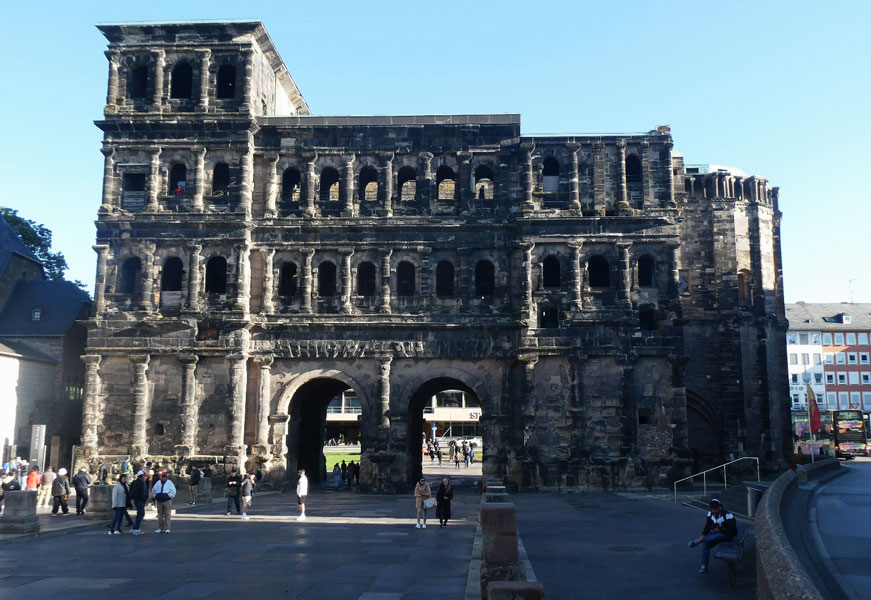
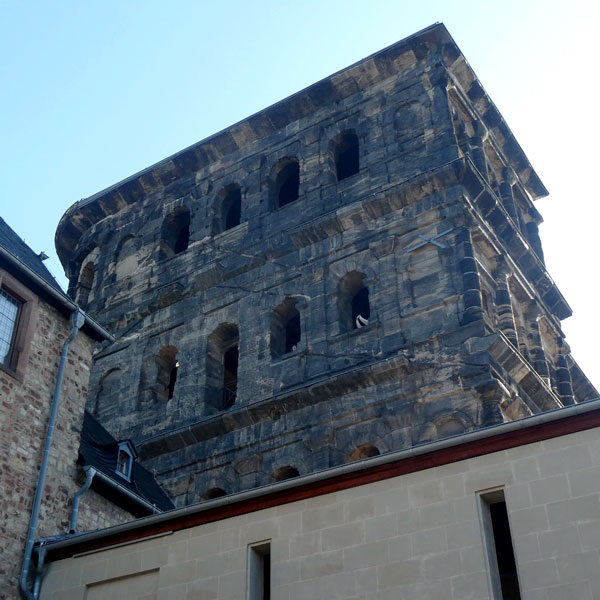
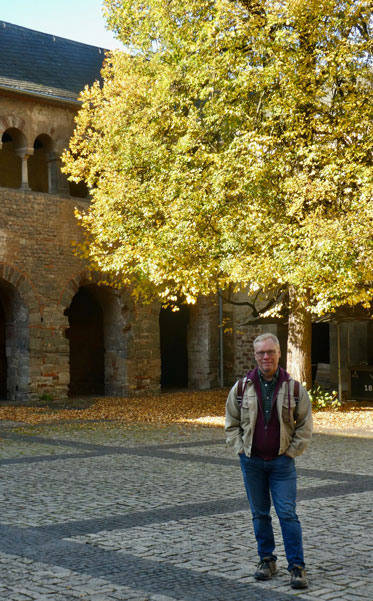
Here, our narrated walking tour came to its end and we were set loose to explore the unsuspecting city. Rob and I decided to walk to the museum’d ruins of the Imperial Roman Baths (the Kaiserthermen), zigzagging through unexplored (and not terribly exciting) areas of the city until we returned to vicinity of the Cathedral. Hoping that mass was over, I found a working door to enter the building…only to discover that services were still in session. Disappointed, we started heading towards the Baths.
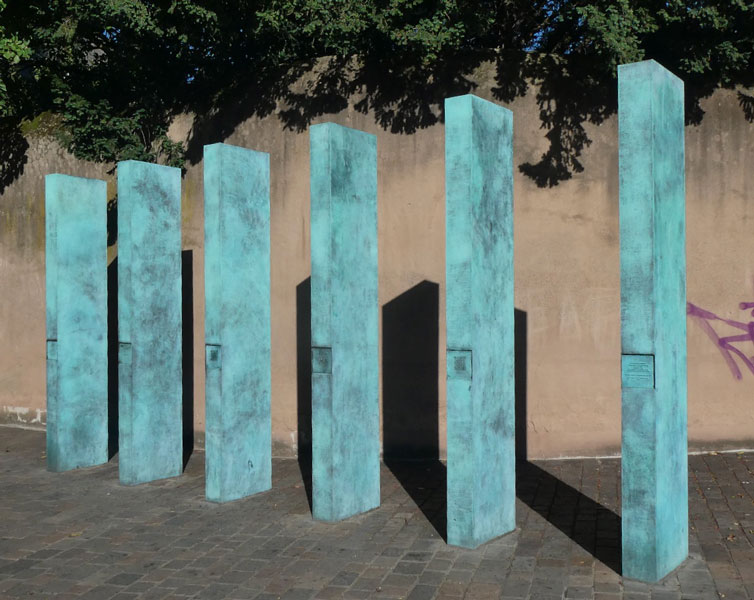
Close by, we happened on a surprising but somber discovery: a memorial to the arrest, deportation and murder of the gypsy populace of Trier by the Nazis that was done in three waves: 1938, 1940 & 1943. Inscribed on the monument: “The dignity of all people is inviolable. In memory of the Sinti and Roma deported during the Nazi era. Men, women and children in our city were deported from their homeland to concentration camps and murdered.”
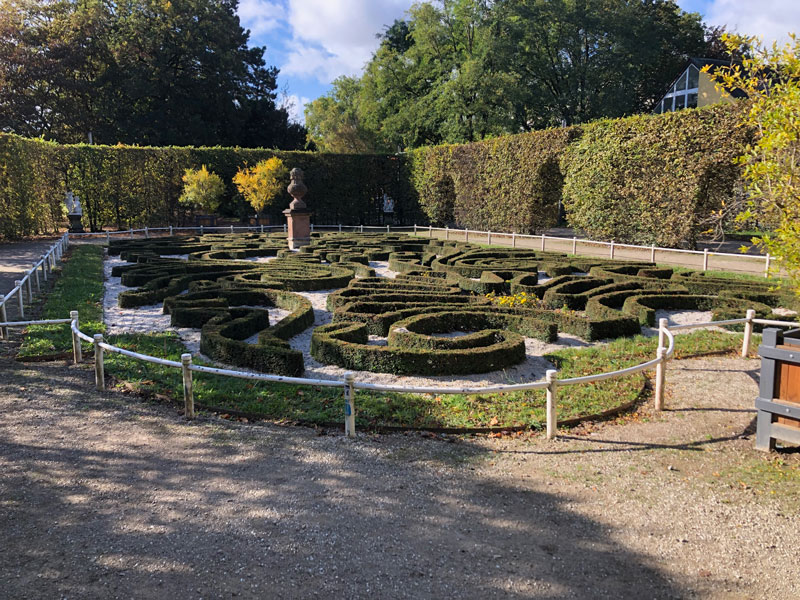
Continuing past the Cathedral and Constantine’s throne room, we proceeded to cross the Electoral Palace gardens and found this fanciful topiary gem hidden behind a tall hedgerow. It must be spectacular when festooned with flowering plants.
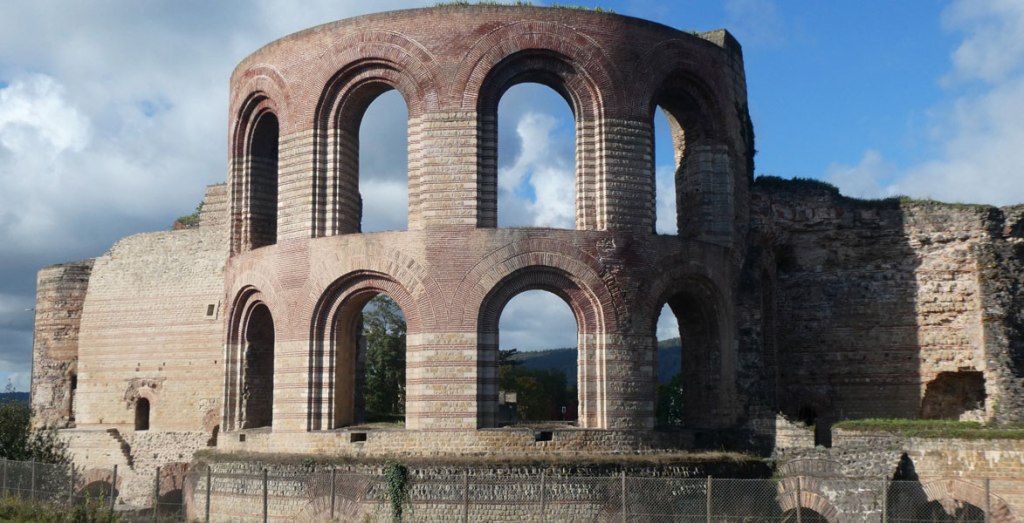
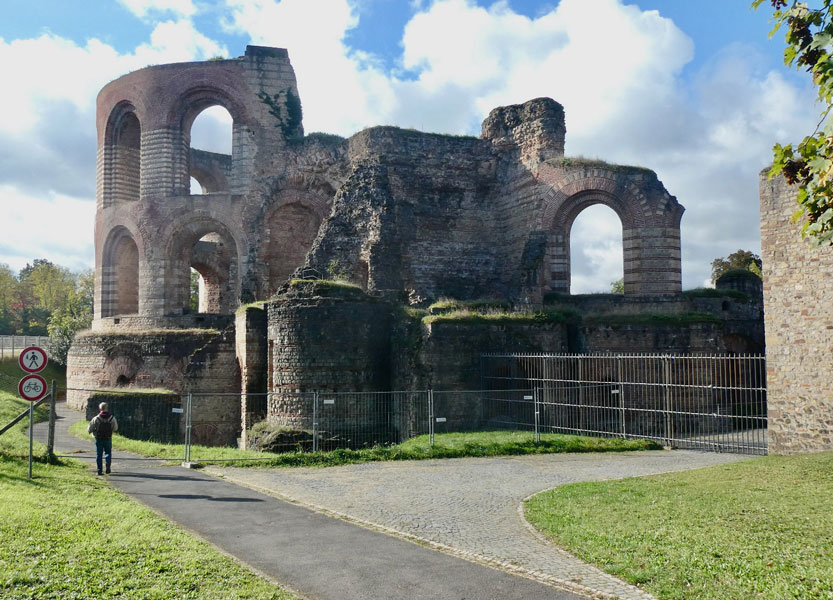
Reaching the Imperial Baths, we discovered the museum wasn’t open (either all today or until 4:30 PM today…we couldn’t decipher.) Either way, we could only admire and capture the ruins from a distance…as you see here.
Then a decision had to be made. Catch one of the scheduled bus runs back to the boat, with the last being at noon? Or hang around Trier for three more hours before the next pickup at 2:30 PM?
We chose to return. But had a plan!
After lunch, we arranged for three e-bicycles for Rob, Peg and I to ride along the banks of the Mosel.
Long story short: After a noble effort, Peg stated categorically, “I hate this!” She turned around to return to the ship.
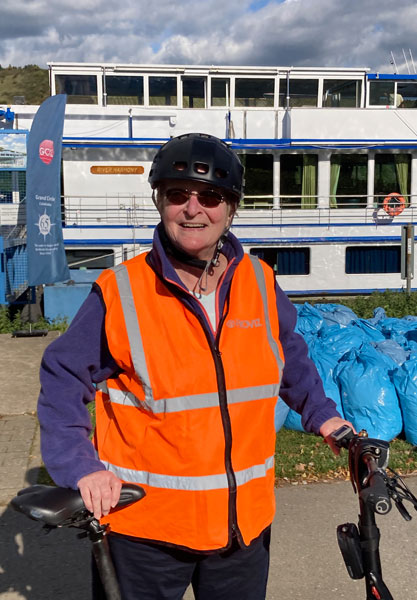
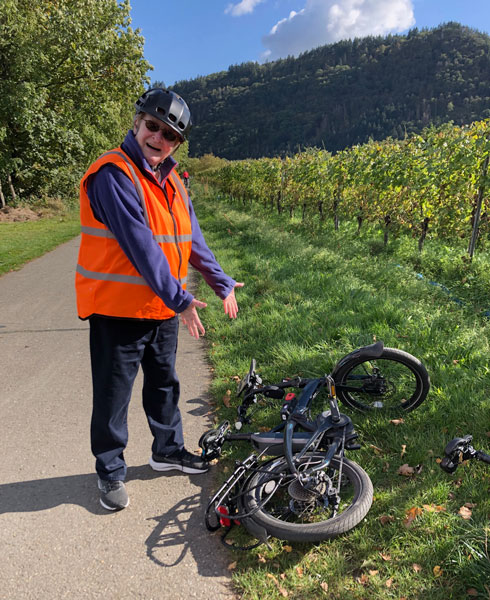
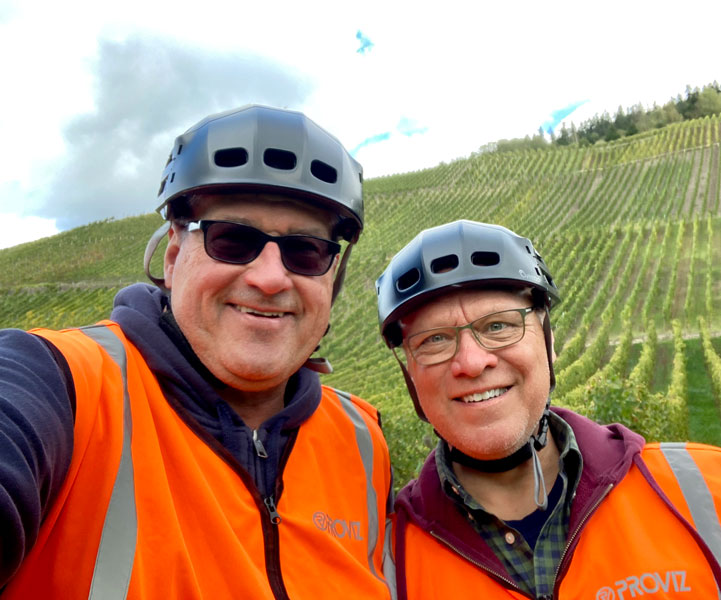
After getting her back alive, Rob and continued in the opposite direction, completing a 12.2 mile round trip.
We had hoped to fuel up at a biergarten during the ride…but only found one of the Mosel River’s locks, not being used at the time, and a small village with little evidence of habitation short of one woman with a walker. We did ride past a lot of vineyards, tho’.
Once more aboard ship, a lecture on “Cracks in the EU” followed by the nightly cocktail hour, port talk and dinner was the prelude to tonight’s entertainment: a group of local German folk dancers keeping the culture alive with traditional music and clothing.
 Romance of the Rhine & Mosel
Biking? Sorry I missed it. 😏
LikeLike
Sorry Peg lost her bike 🤣
❤️ Nini
LikeLike