
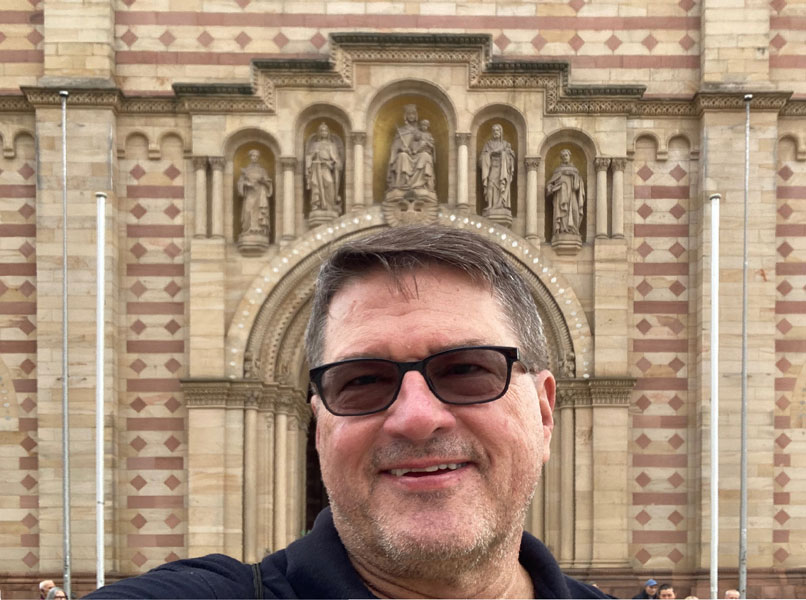
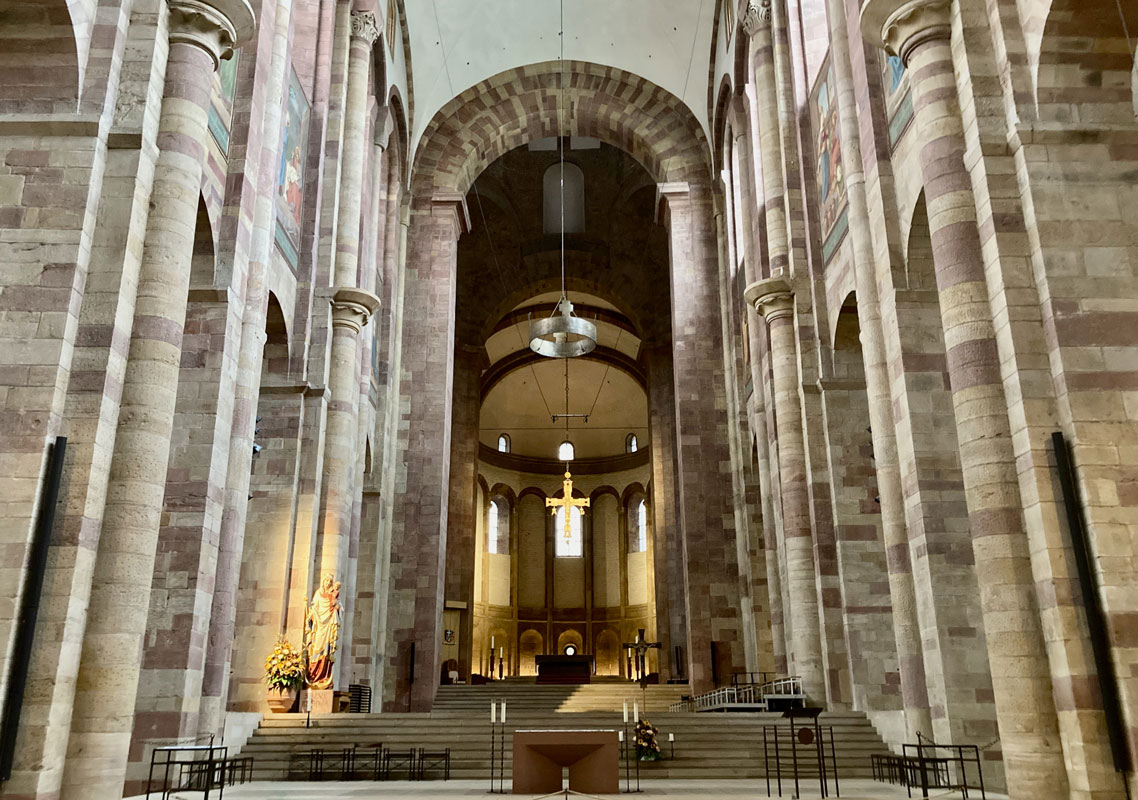
Today’s port of call was Speyer, a comfortable commercial town sprinkled with in-spired church buildings, all of which are dwarfed by the immense Speyer Cathedral.
We actually dock adjacent to Speyer’s Cathedral Gardens. Stepping off the boat’s ramp, our path into town runs between two adjacent biergartens overlooking the river. (It was said that the original owners were competing brothers–until one burned down th’other’s establishment. Now, the original one has the umbrella’d tables and massive shade trees that one expects to find at a small-town Oktoberfest…and the other was replaced with a sleek, 20th century terraced establishment–also with the requisite umbrella’d tables–that appeals to the less nostalgic.) We mentally planned to end our out-and-about day with a local lager (I’m using that term generically for “beer”) at one (or both) of the biergartens.
Onward strolled the red group down a sycamore-lined road. Glimpses of the great cathedral, high above us on a natural bluff, kept popping up between the old-growth trees of the park.
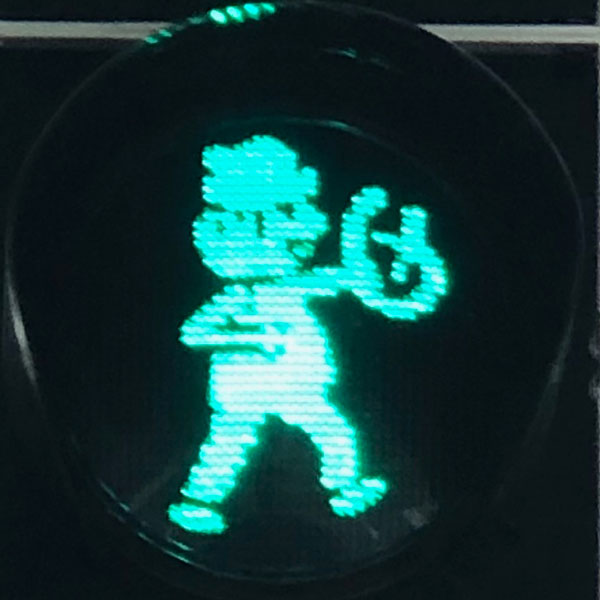
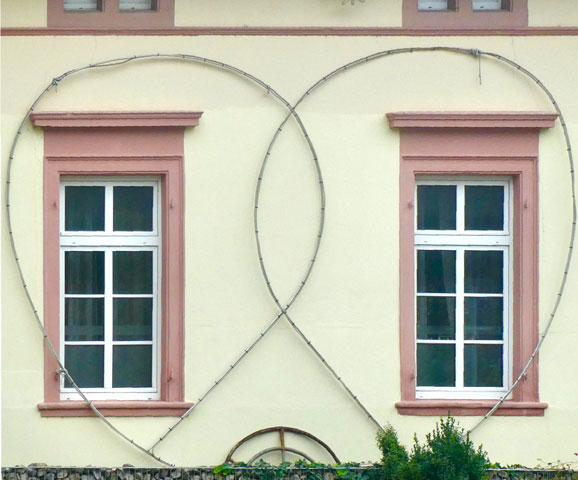
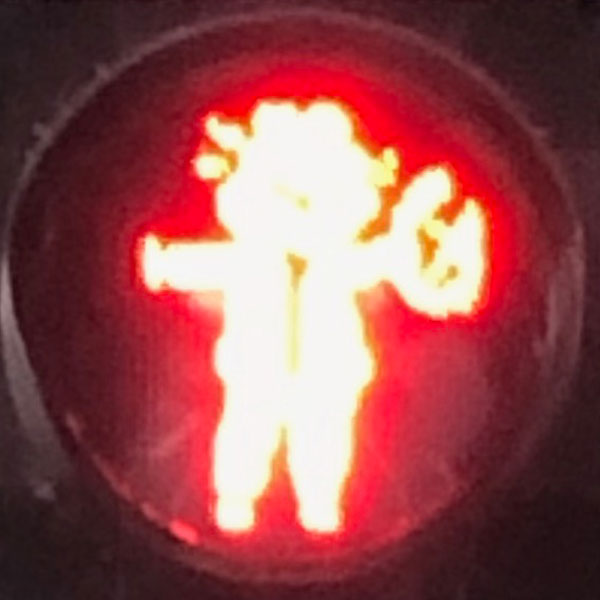
Our traveling narrative on Speyer informs us that supposedly (mythically?) the pretzel was invented here by some baker for some ruler. The twisted treat is readily available throughout town in many forms…but we don’t get very far from the boat before the first visual reminders of this local lore appear. First, a building in the park has a huge pretzel made from a string of lights wrapped around its windows. Then, at our first controlled street crossing, we see that even the little STOP and GO guys are both carrying the knotted pastry treat.
Deeper into the park now, we pause at a two-part bronze sculptural installation, “Fährmann hol über” by local artist Georg Zeuner. One part is a large, undulating mass of flowing forms culminating in eight individuals’ crowned heads. The second, off and to the left a bit, consists of a ferryman in a brimmed hat with a large oar. Of course, there is a story. And, since this is the Domgarten, it relates to the now-unseen-but-ever-present building that is our destination.
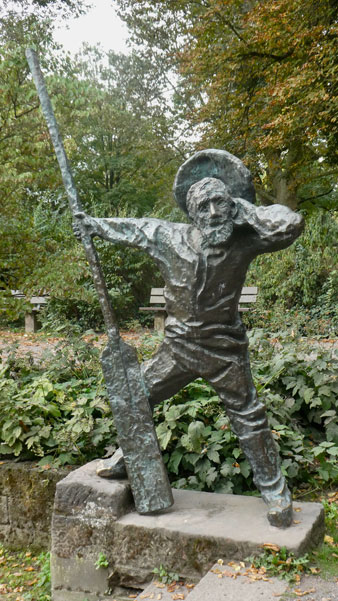
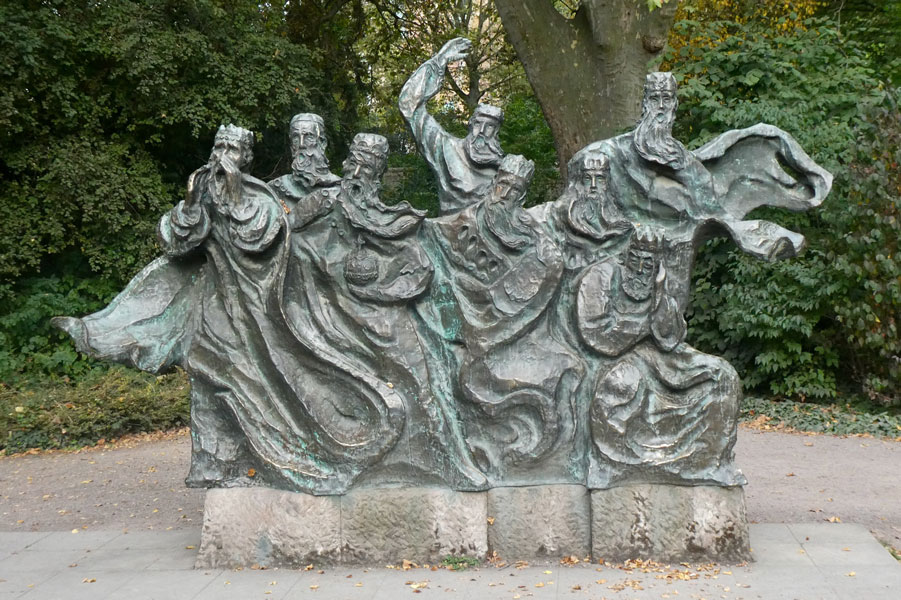
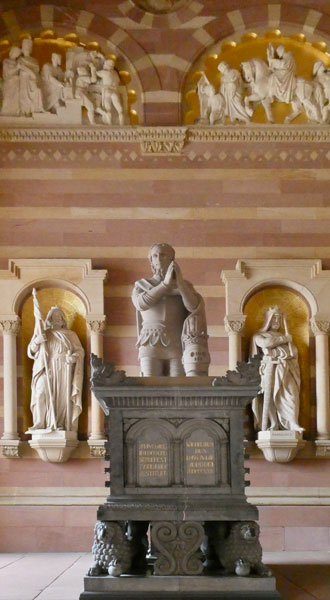
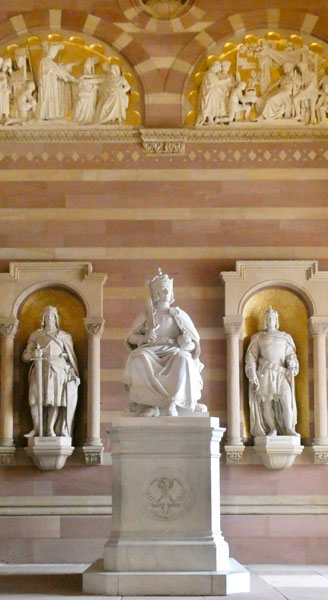
According to the legend, the ferryman dreams that eight dead German Emperors (actually four emperors and four kings who were emperors-in-waiting…as in waiting for the pope to elevate them to emperor-ship) left their crypts in the Cathedral and headed for the Rhine to help the Empire fight Napoleon. The dead emperors (and kings!) told the ferryman to “take us over the Rhine.” A few hours later, Napoleon is defeated. The dead returned to their crypts and Speyer was safe.
We ascended from the gardens to the cathedral and the town above.
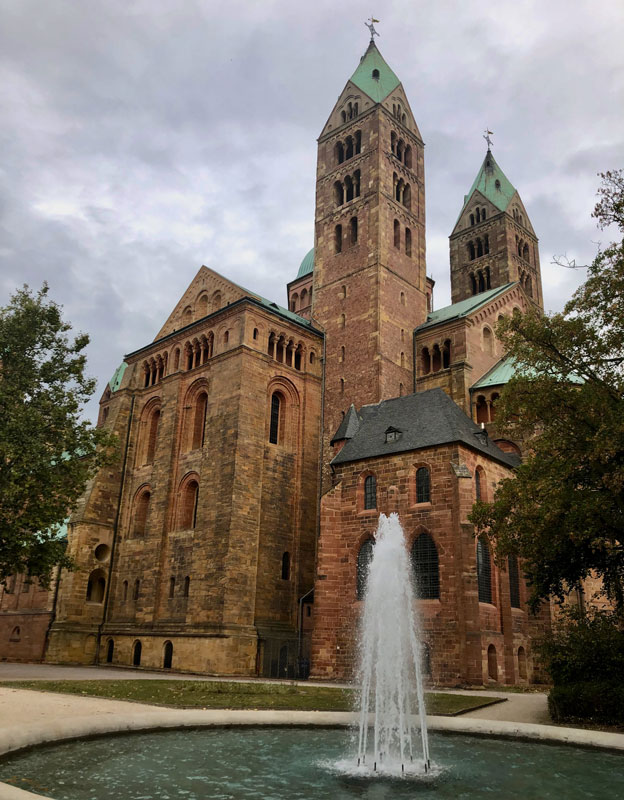
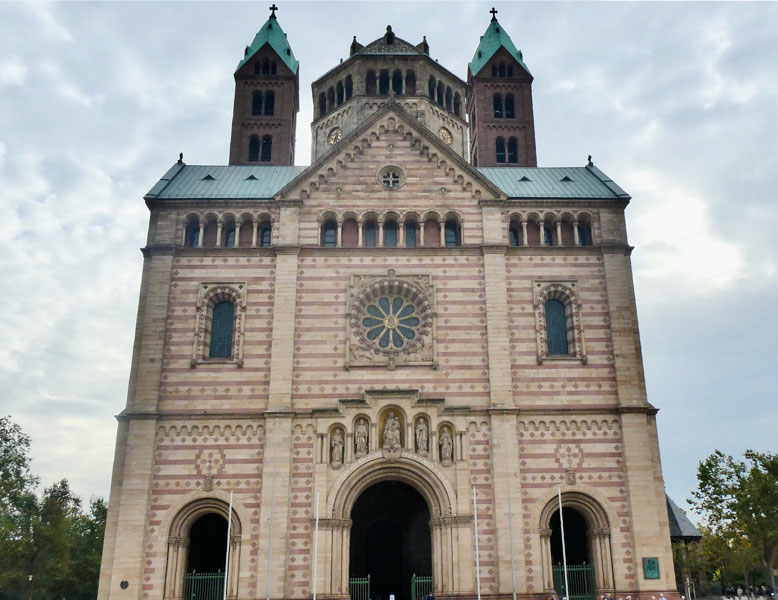
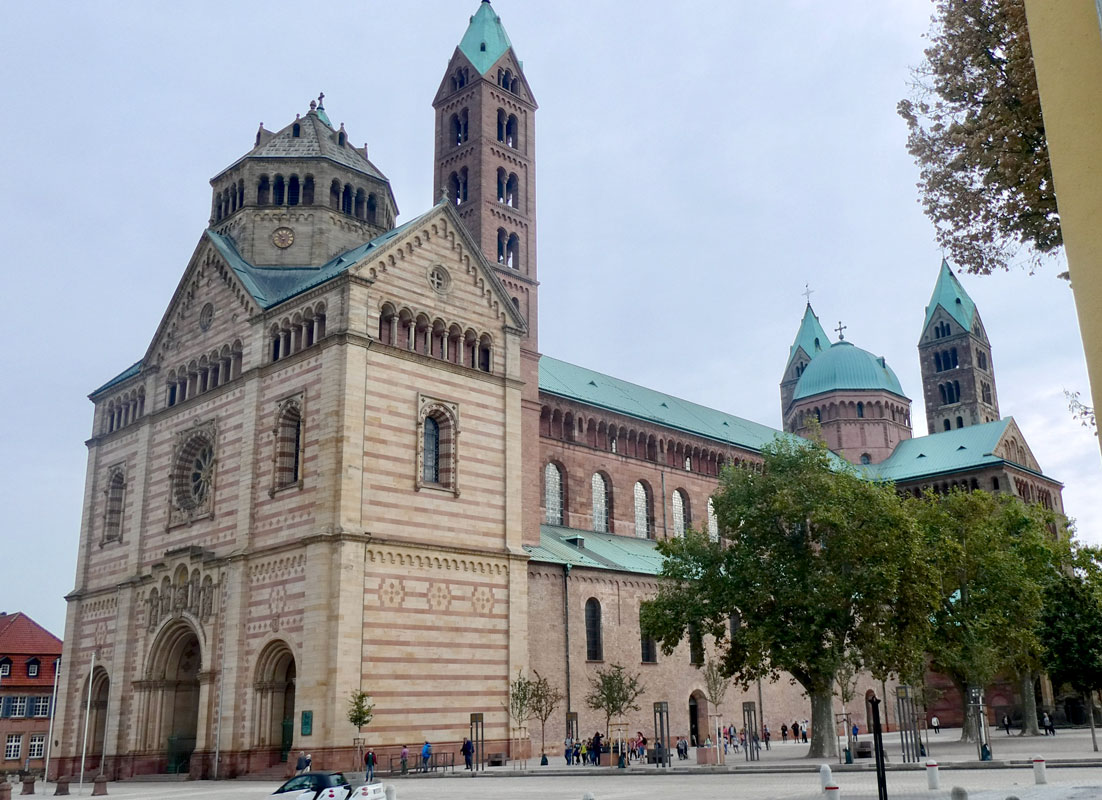
The Speyer Cathedral is considered the world’s largest Romanesque church. As related earlier, The Cathedral contains the tombs of eight German emperors and kings, as well as several bishops.
Exploring alt Speyer
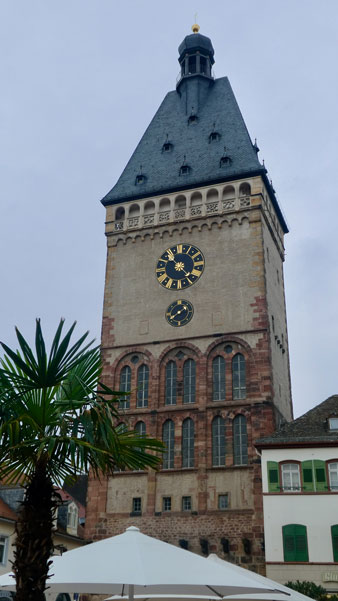
The main tourist business district is concentrated on an axis from the Cathedral down to the Altpörtel, the looming tower that was once the main city gate. Between these two points, there is a lively market square replete with shops, restaurants, cafe tables and a few points of interest. A second, parallel artery lined with more shops and sites, branched off at the Old Mint building and rejoined the main avenue by the tower.
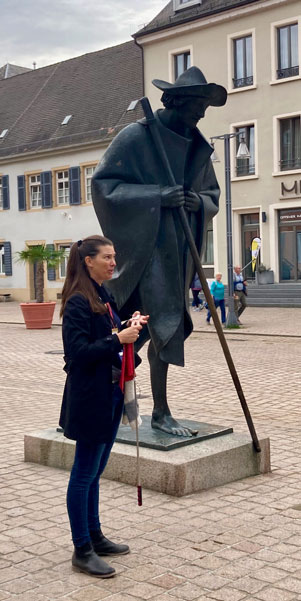
Julia led us down into the market area, pointing out some of the highlights of Speyer. She explained the Camino de Santiago pilgrimage to the uninitiated before the tall, brooding bronze sculpture on the square. And then she released us to our own devices.
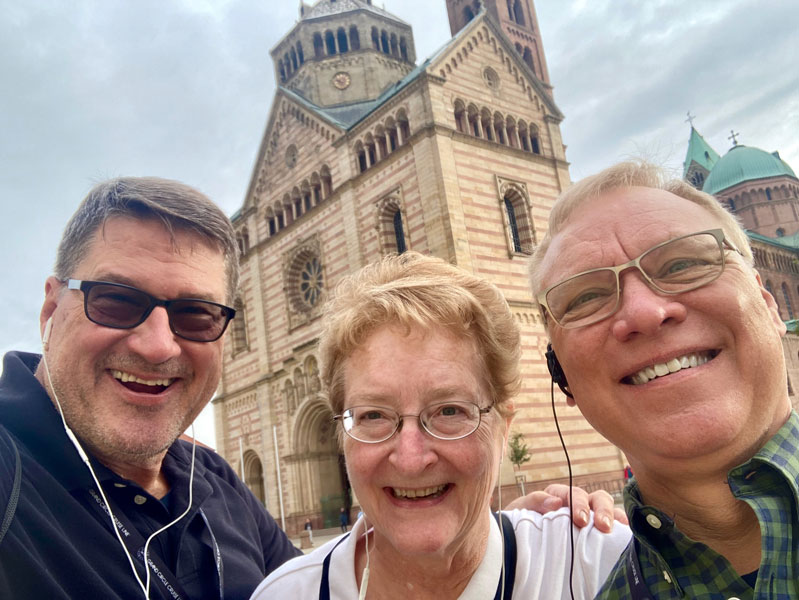
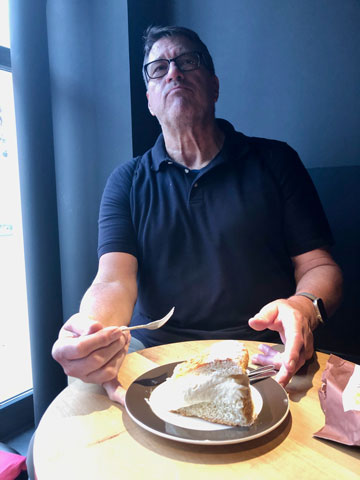
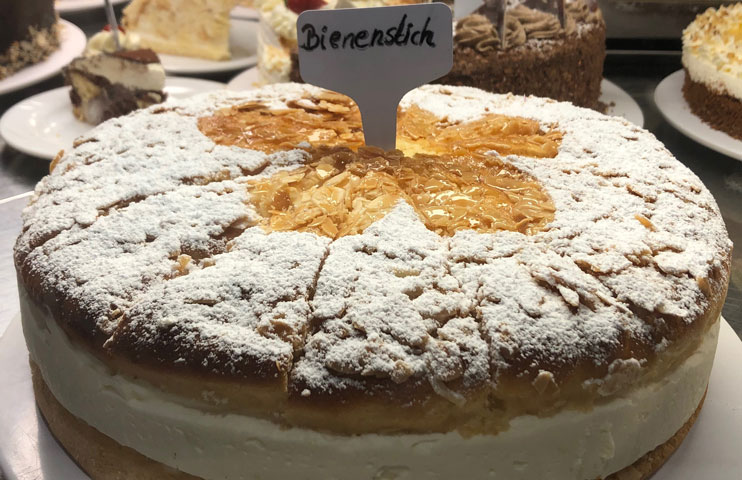
With the cathedral at our backs, we three started doing recon for interesting shops as we headed for the old city gate. We branched off onto the parallel shopping street, found a spot with available Wi-Fi for a few moments of connectivity and, driven by Peg’s need for some coffee, we were lured into a little cafe where a cup of coffee turned into two cups, two pretzels and a healthy slice of a cream-stuffed, honey-sweetened pastry, a bienenstick or “bee sting cake.”
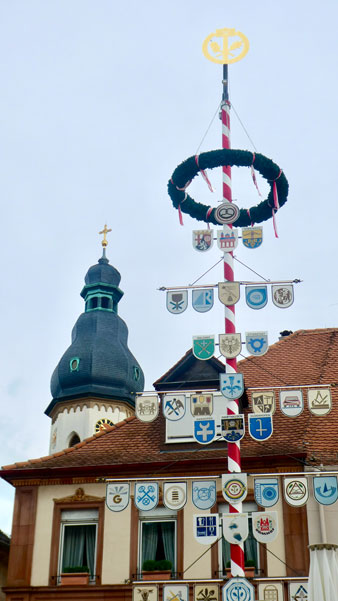
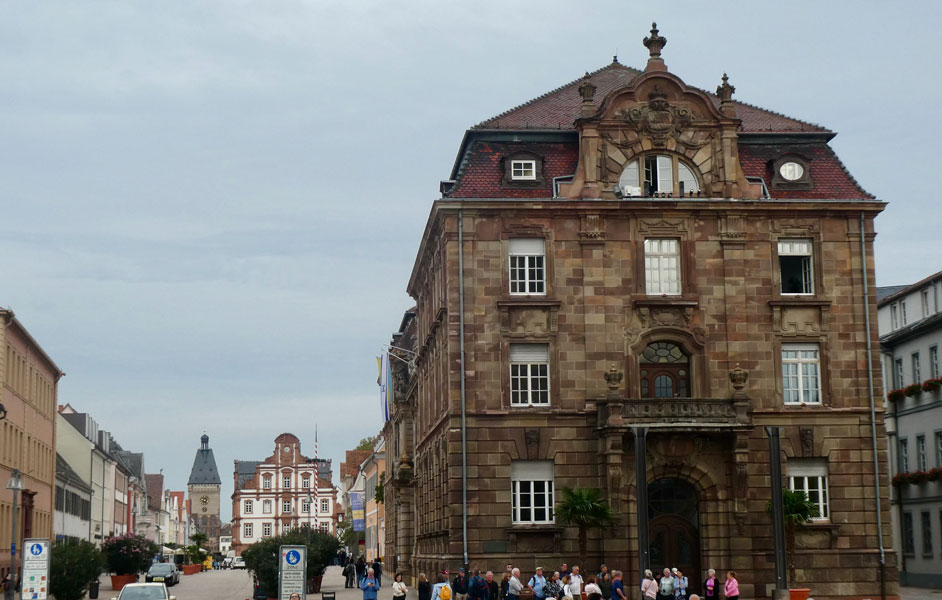
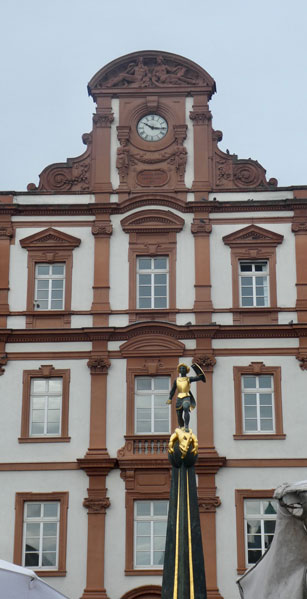
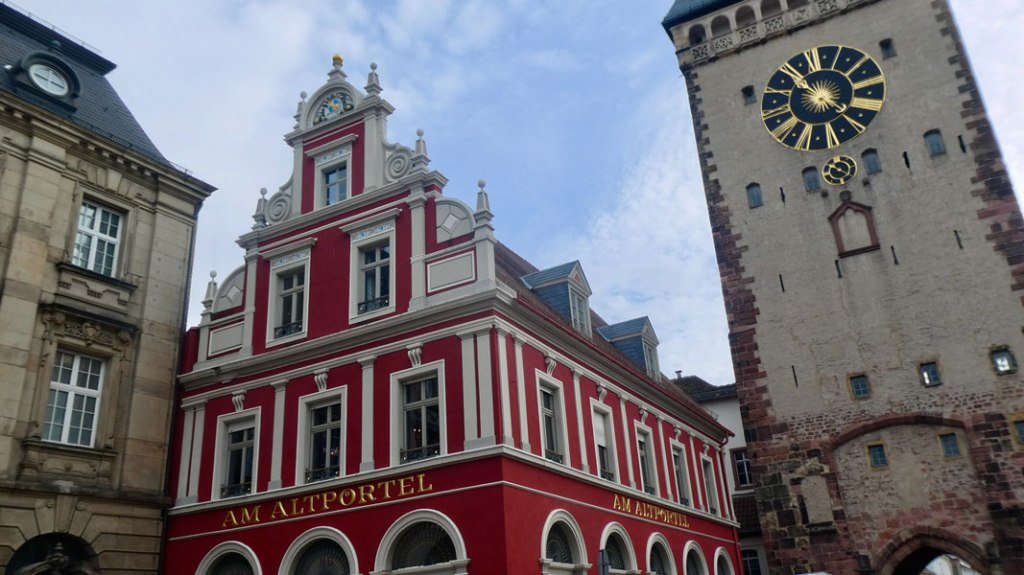
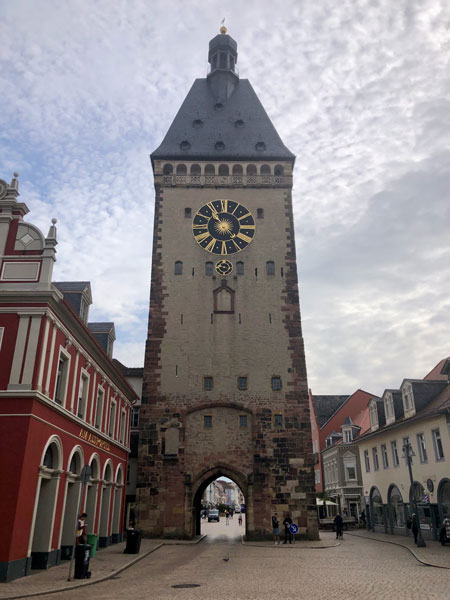
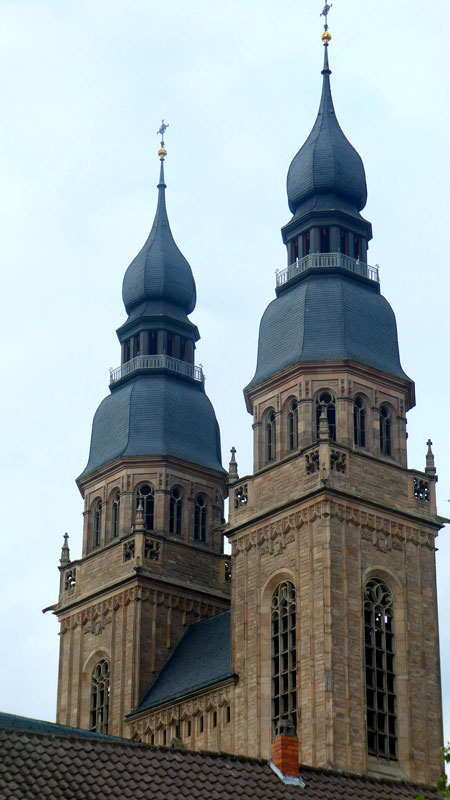
Reinvigorated by our cake and coffee break, we exited the market square area and explored beyond the city gate along Maximillianstraße, lured by distant spires. Eventually, we reached two imposing church buildings. The first, an active Catholic church, was a disappointment as a tourist lure. Dark and cold, it seemed to be a good place for confession and penance.
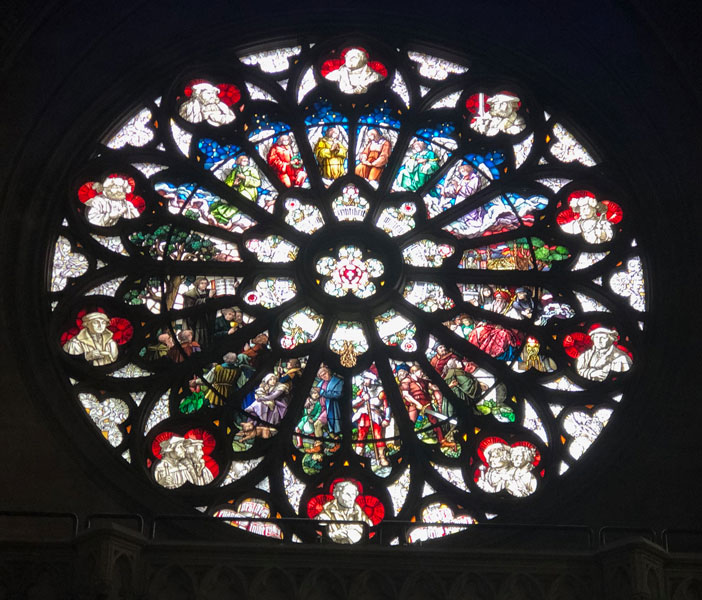
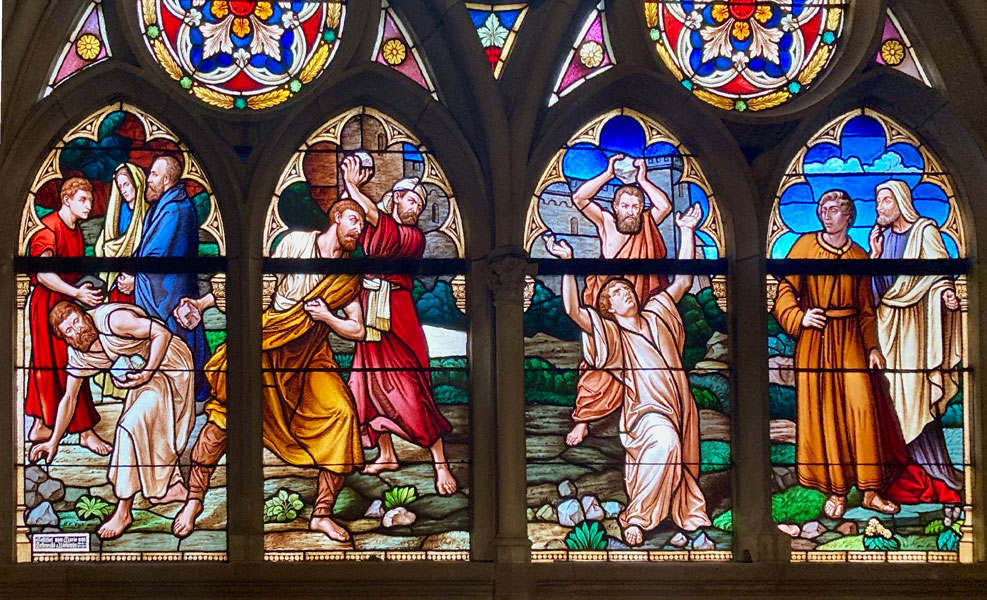
The second was the Speyer Protestant Memorial Church. It was at a 1529 gathering in Speyer that the name “Protestants” was coined and this building serves as a reminder of the original Protestant act. Filled with the morning sun illuminating the many stained glass windows and, at our visit, resounding with organ music as someone was being instructed on the keyboard, it was a much more welcoming place. But then, most museums are!
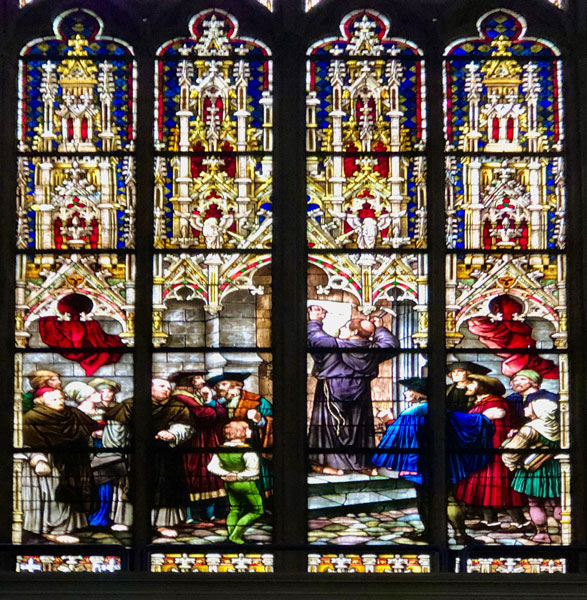
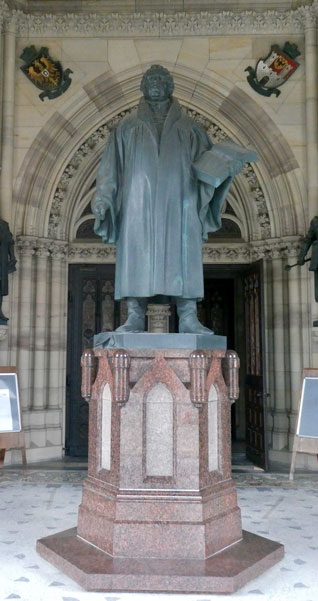
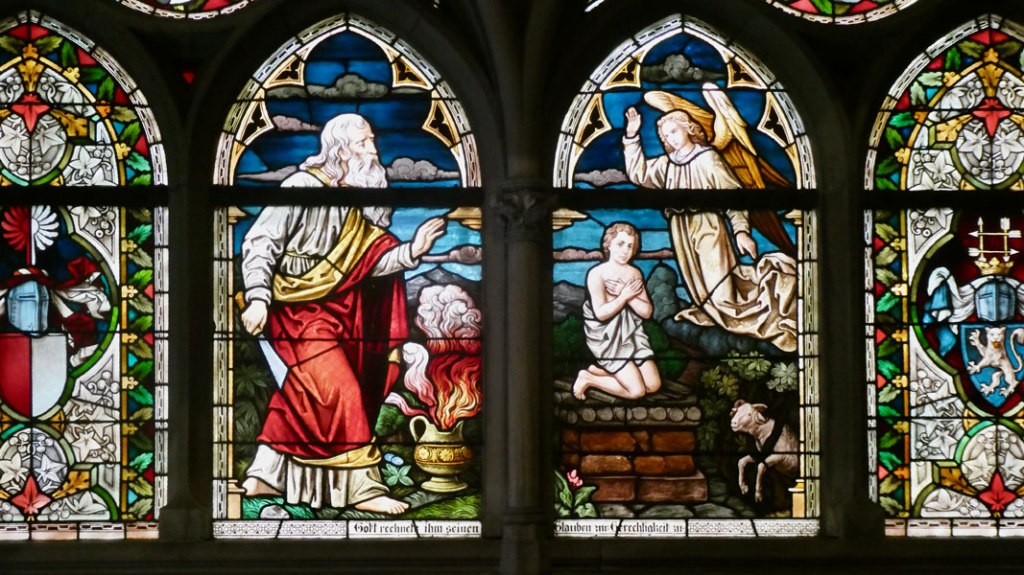
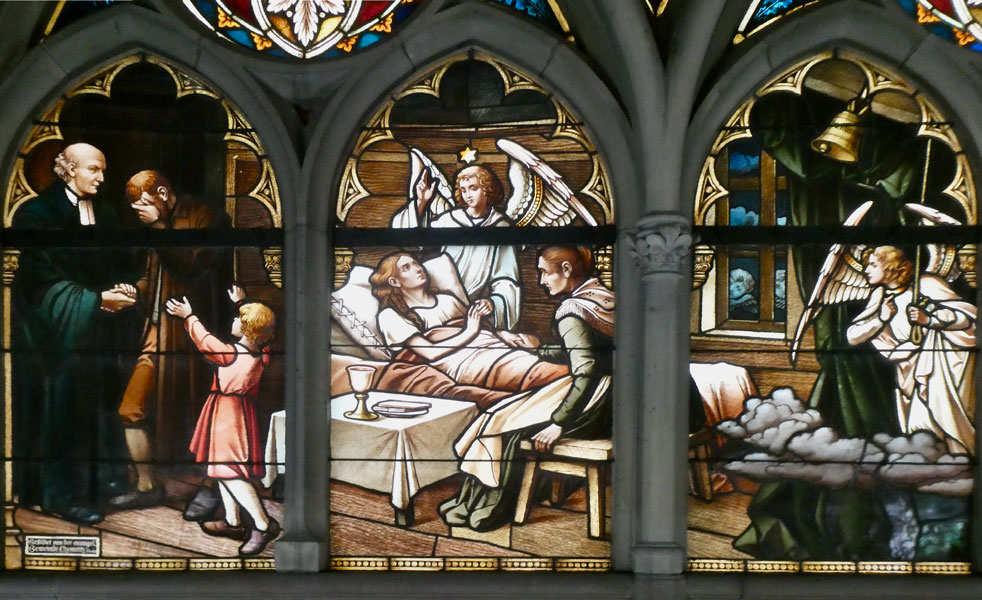
“…and the greatest of these is love.”
From the Protestant Memorial Church, we made our way back to the center of it all for a little shopping before deciding on where to have lunch. Unable to decide, we eventually headed back to the boat to eat. And there hangs a tale.
[ ✍️ Click here for a humorous aside]
An Afternoon Beer & Appetizer at a Biergarten
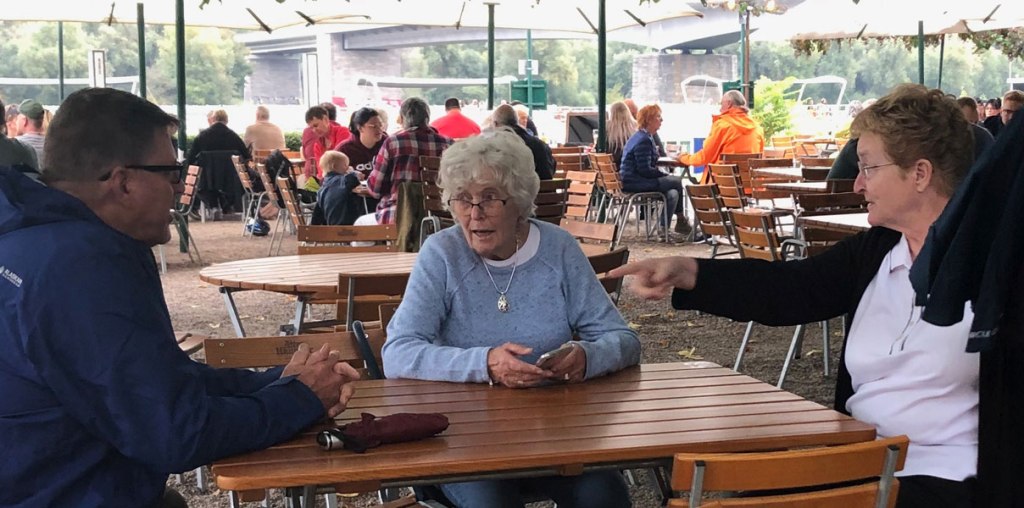
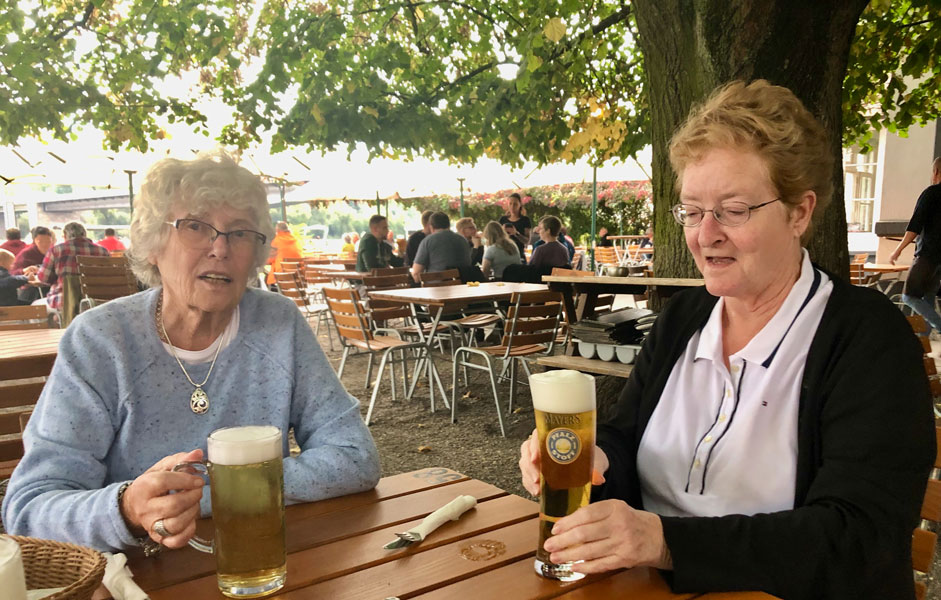
We were still determined to have at least one beer at one of the biergartens sitting within spitting distance of the ship. We were joined by two other fellow passengers: Michigan Gregg and California Traudel. And, thanks to Traudel, our afternoon “imbibe-ry” became more of an authentic German experience than we could have hoped.
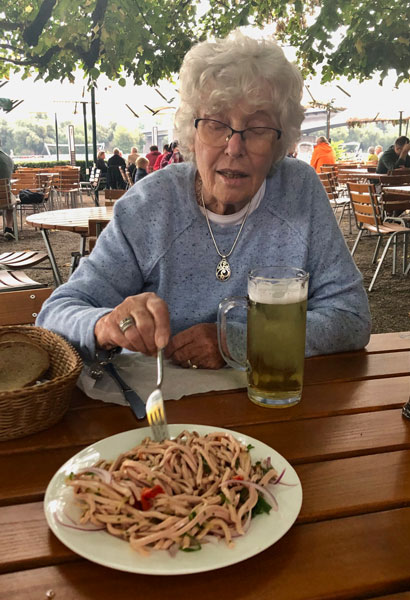
Born here (she moved to the USA as an adult), Traudel had a lot of suggestions on how we should experience the authentic Germany. Here, she ordered (in German) a plate of Wurstsalat to share. A typical Brotzeit (savory snack), it consists of long slices of sausage — imagine fettuccine made of bologna — with cheese, onions & pickles tossed in a simple vinaigrette dressing. It was lecker (delicious)!
Tonight’s after dinner “infotainment” consisted of presentations from five crew members introducing us to their native countries. Covered were Croatia, Bulgaria, Romania, Ukraine and India. While sometimes a little reserved in their delivery, everyone was enthusiastic and exuded a pride in their homeland that was palpable.
 Romance of the Rhine & Mosel