
This was our last day in France–or at least France as it is today. The Alsace region and its urban jewel, Strasbourg, have been shuffled (that’s a gentle way of putting it) between France and Germany too many times to recount. During the two World War periods, it changed hands four times alone.
But, for today and all time (we hope), it is and remains a solidly French confection with a heavy dose of Germanic seasoning flavoring the recipe.
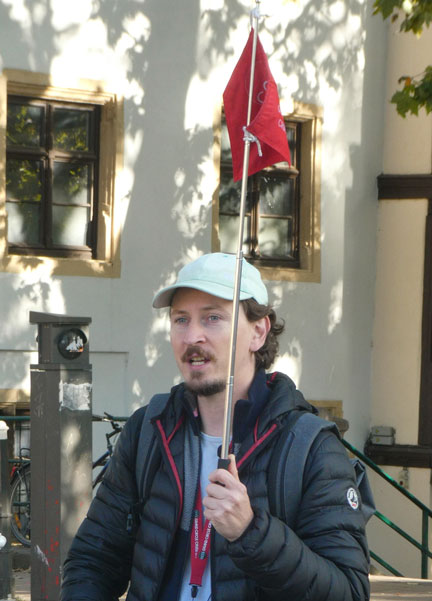
We were met dockside by our local Alsatian guide, Remy, who provided the narrative for our tour Strasbourg, from Little France to the cathedral. Notably, this was the first time in any of our travels with GCT that we were divided into four groups: the three original color-coded ones and a voluntary fourth one composed of those travelers seeking (or needing) a gentler, less exhaustive (read: less physical) tour experience.
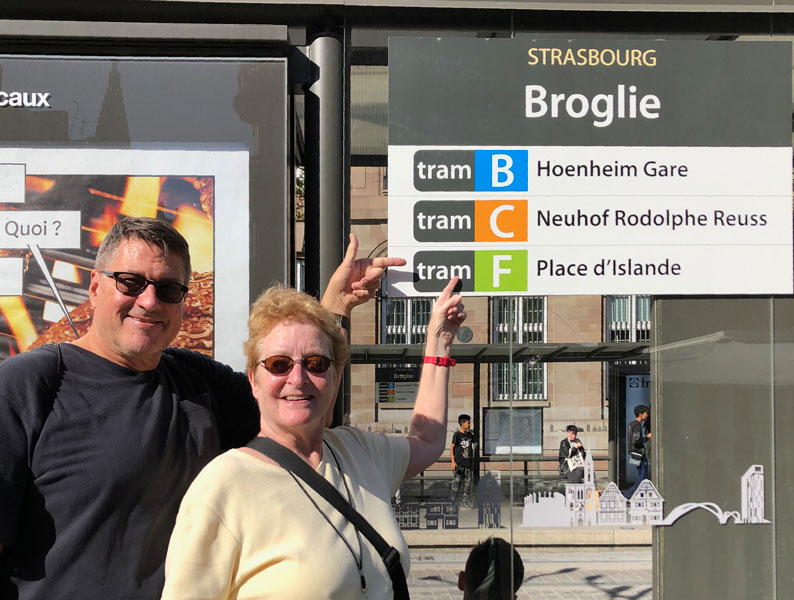
Our first leg of the journey was riding the F tram on the Strasbourg public transportation system. As in Basel, the streetcar lines here are a clean, quiet and efficient means of moving people along. (Probably cost-effective as well…but Grand Circle purchased our day passes, so I can’t speak of that.) And those day passes made most of Strasbourg just a tram ride away.
But, back to the tour. The historic core of the city is an island created by the dividing of the River Ill, a tributary of the Rhine. In addition, many canals have been added over time, serving economic and defensive needs in the past–and now, providing incredible scenic views at every turn.
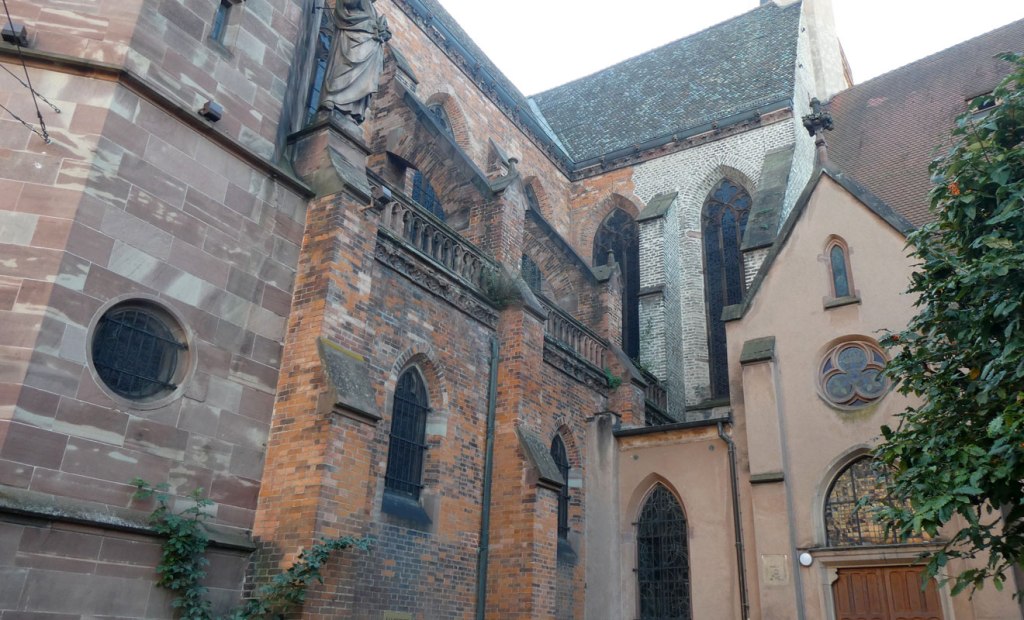
We started with a physical example of how the fracturing of religious authority and the resultant wars manifest itself in a Frankensteinian edifice: the Church of Old Saint Peters (Église Saint-Pierre le Vieux). Built Catholic, converted in the Reformation, divided between both by Louis XIV (There’s a wall!) and then reconfigured by road work, the church is an amalgam of periods and material. BTW, this is one of three churches dedicated to St. Peter in Strasbourg. Was it a lack of ecclesiastical imagination? Or just purposeful confusion?
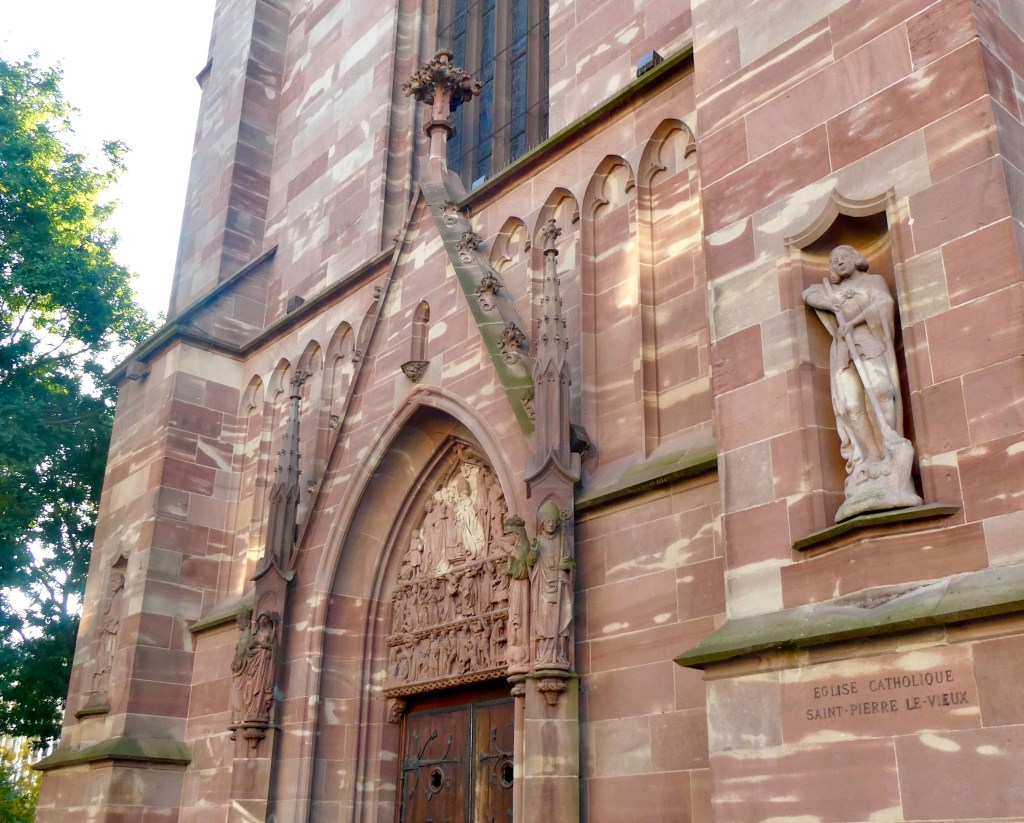
This is the Catholic (or French) entrance
From there, we continued down picturesque, cobble-stone streets until we emerged in a park that overlooked the Vauban Dam and numerous canals, locks and channels of the River Ill. The area is known as Petite-France.
The Vauben Dam is a multi-arched bridge and defensive work erected in the 17th century. Designed to flood the enemy’s advance, our guide Remy said that it was never actually used for that purpose. Today, it is an accessible art space with a rooftop observation deck.
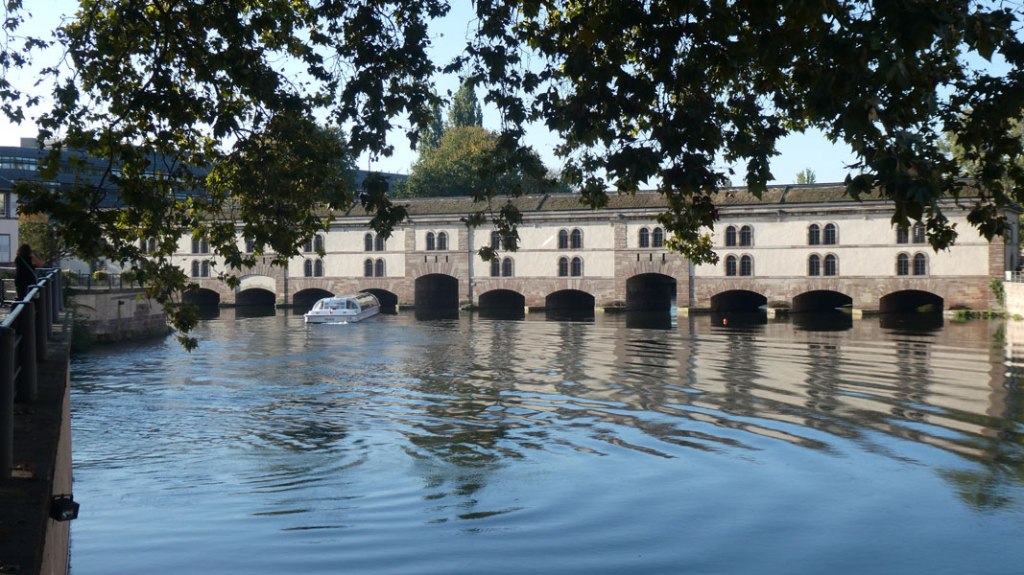
As we continued walking and photographing, Remy explained, as only a local tour guide can, the real reason behind the area’s moniker, Little France. In a nutshell: when the French came to Strasbourg, they brought with them syphilis. Or, as it was more commonly called, the French disease! As it was an incurable nuisance at the time, the Strasbourghers ghettoed the carriers and their associates to this area of town…which was also the center of the leather tanning industry, whose odors and effluences made the area less than desirable but available. With so many French concentrated in one place, the townsfolk began referring to the area as Petite-France with all the implied moral superiority they could muster. And the name stuck, post-penicillin.
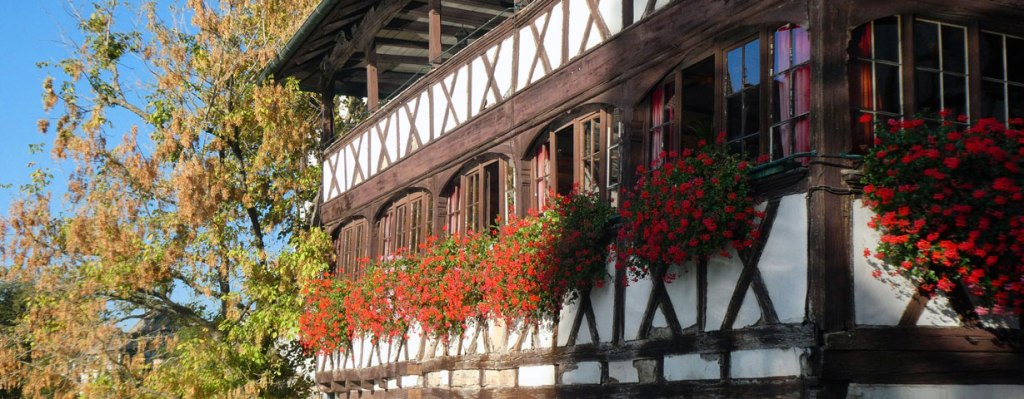
Images from “Petite France”
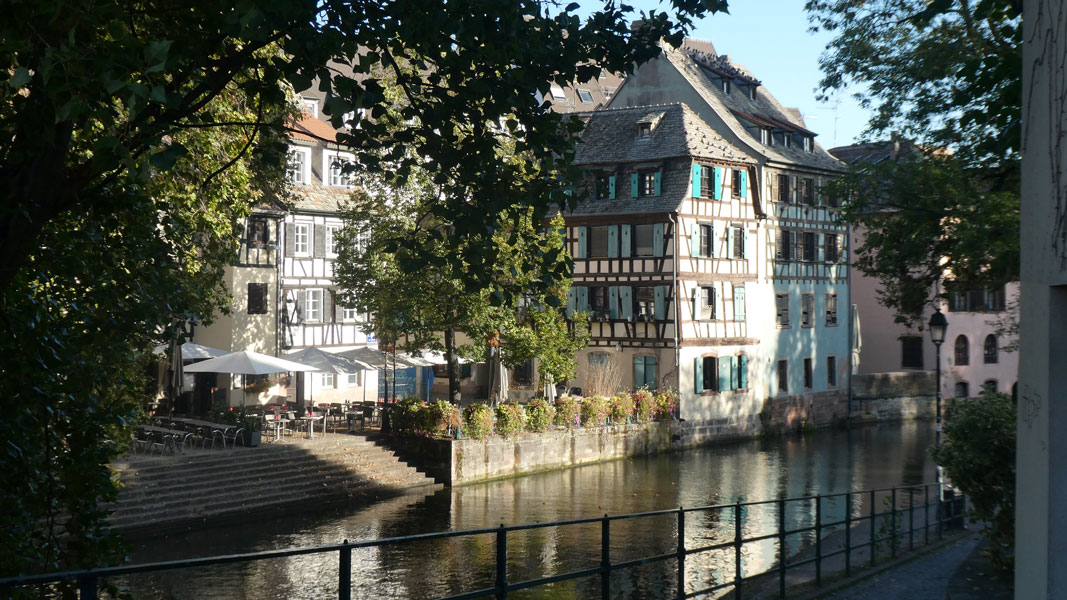
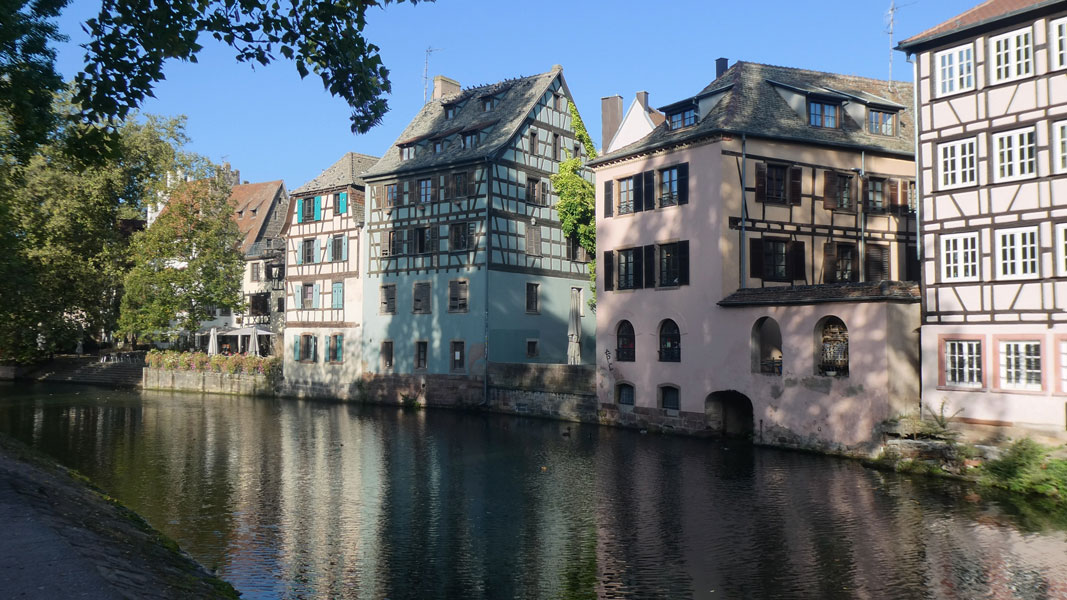
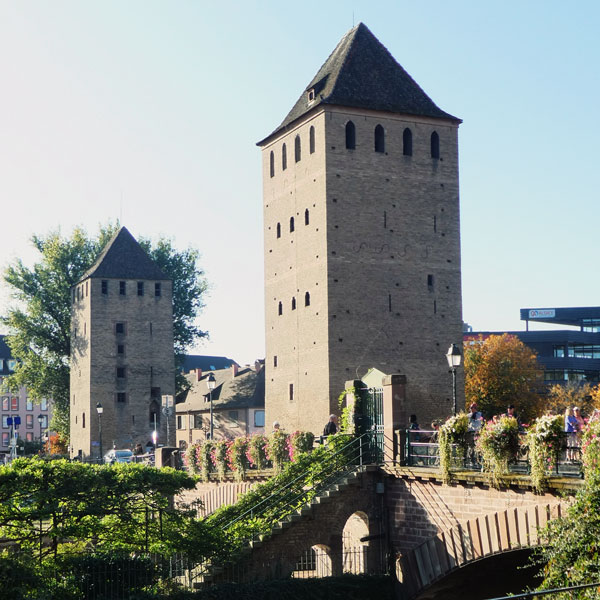
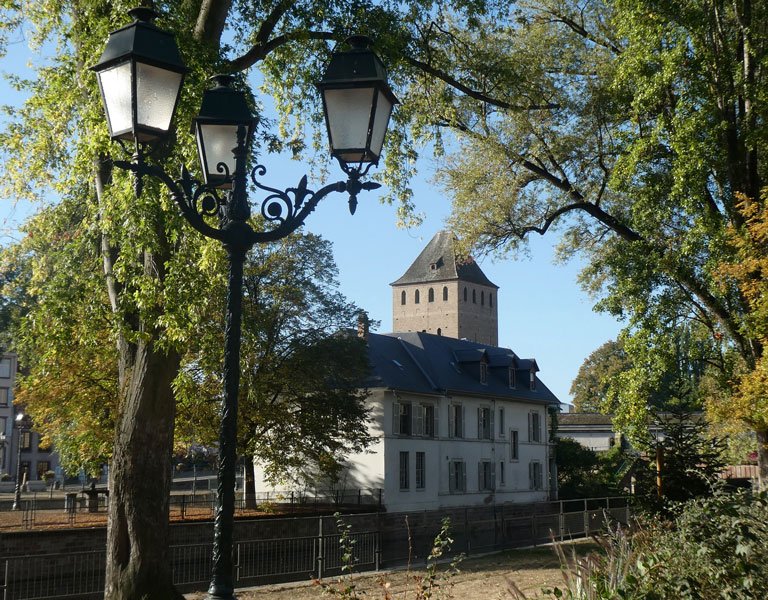
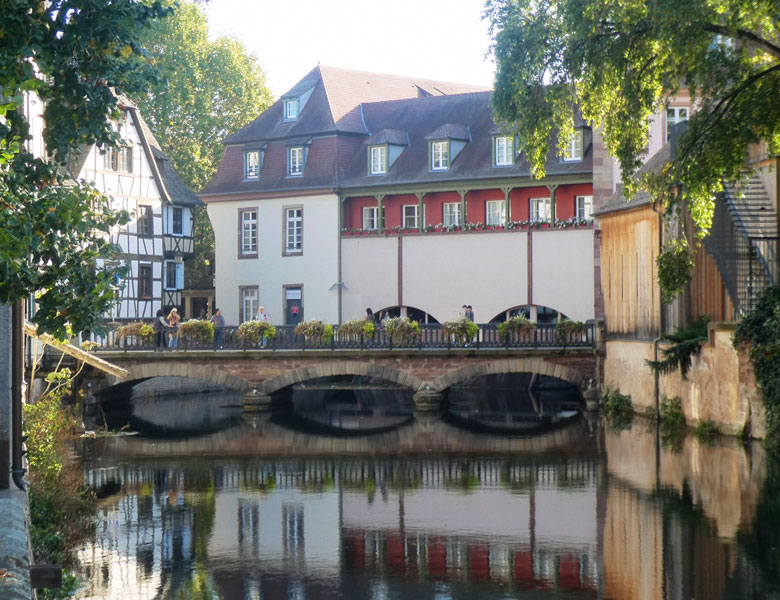
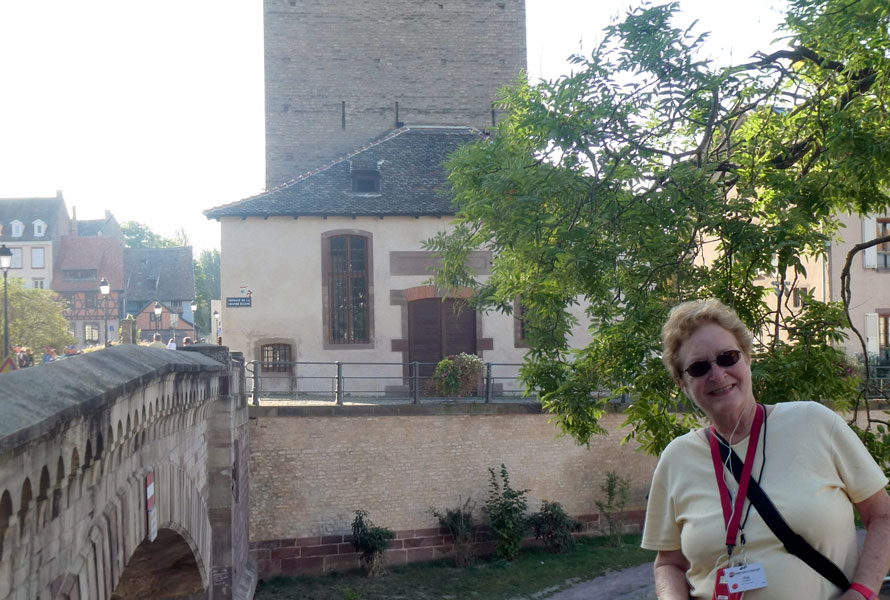
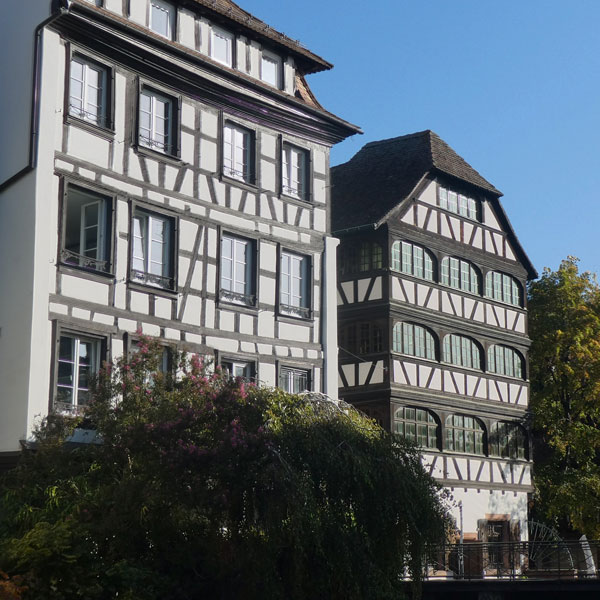
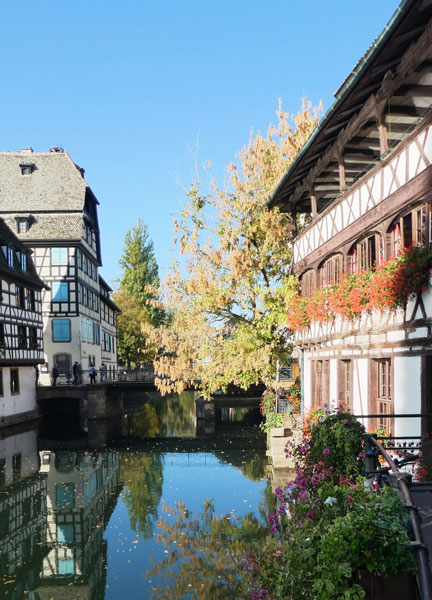
We left the heart of Little France, continuing to weave through the picturesque alleys and streets overhung with guild shields and flowers baskets on our way to Strasbourg’s other star, the cathedral.
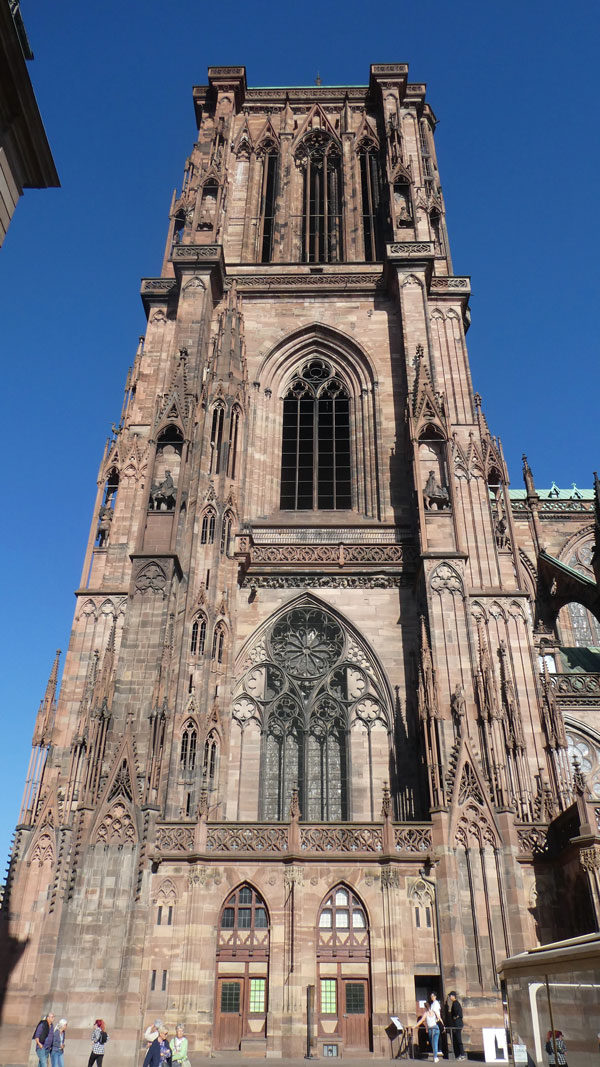
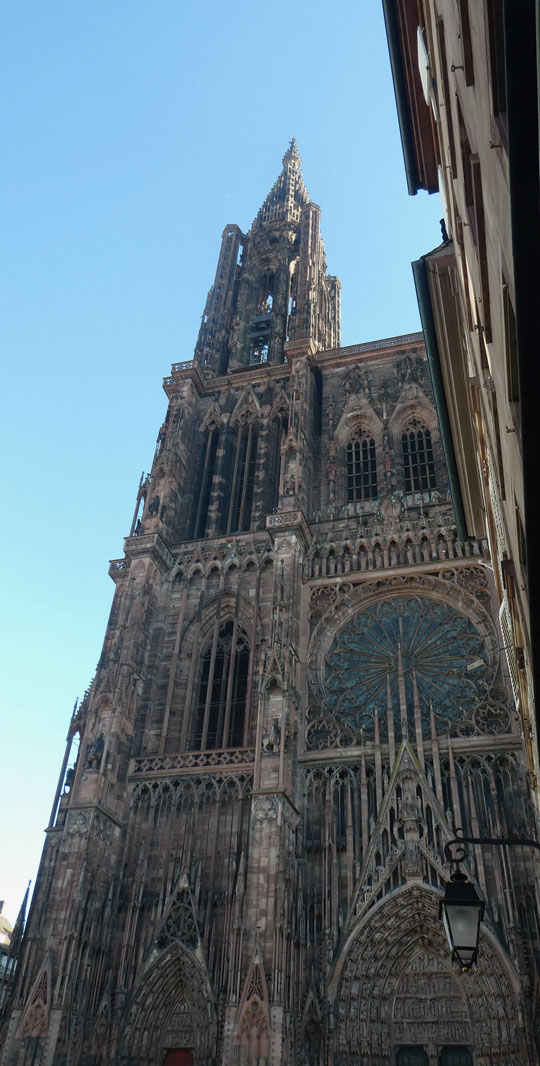
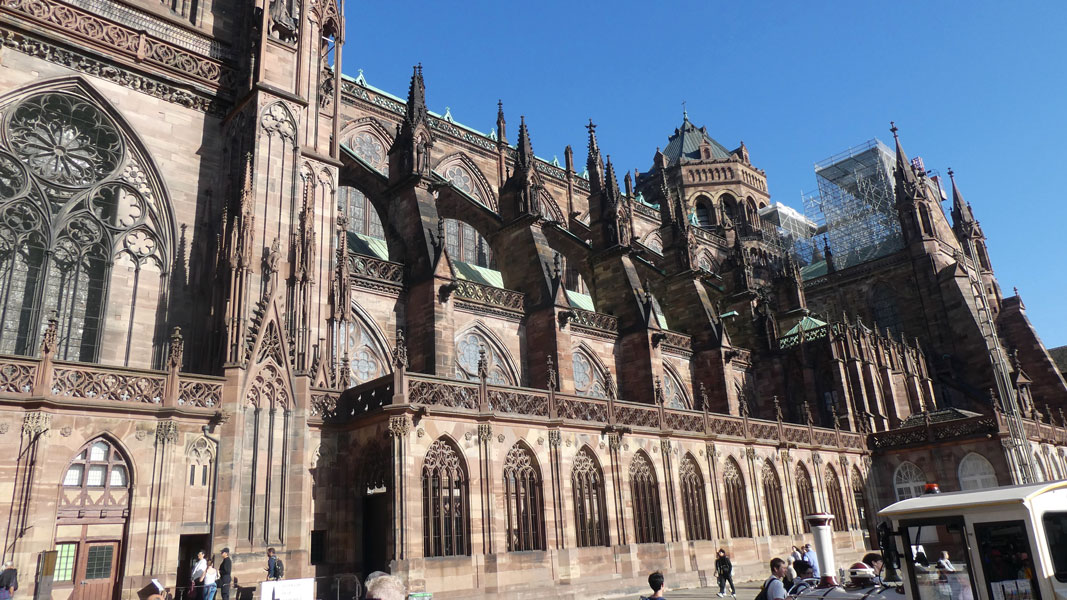
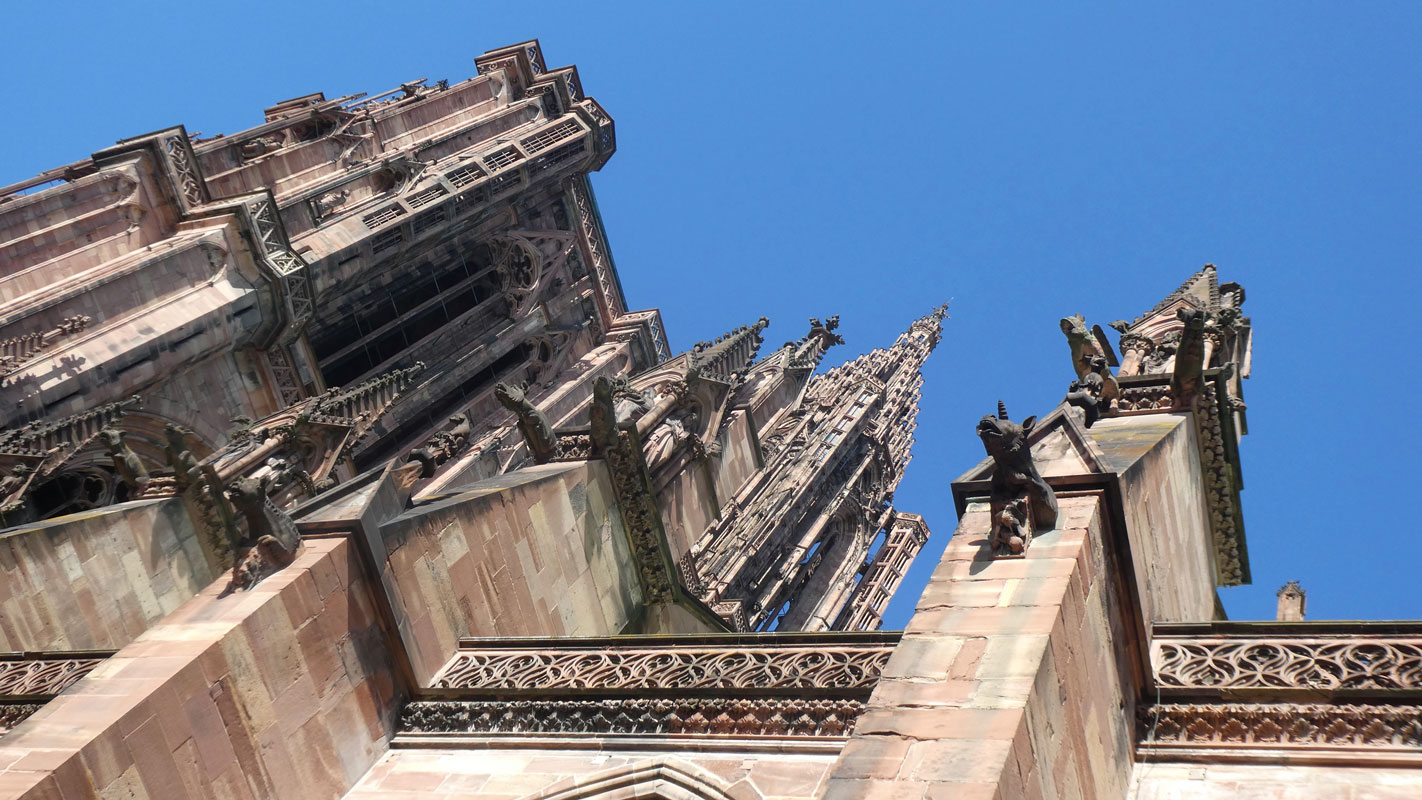
The Strasbourg Cathedral–the Cathédrale Notre-Dame de Strasbourg in French–dominates the city and the countryside. Its single spire, visible from almost anywhere in the city, was the landmark we were to seek if lost.
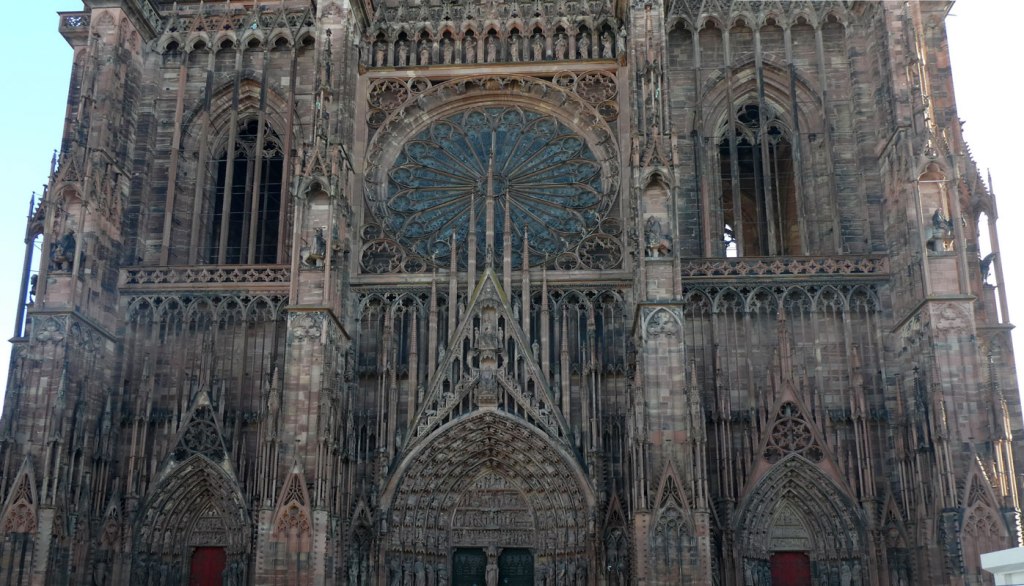
Ground was broken in early 1000 AD and it was completed in the 15th century. The edifice is a mix of Romanesque and Gothic architecture and its spire was, for many years, the tallest structure in the world. The west facade of the cathedral is replete with layer upon layer of delicate and intricate Gothic ornamentation, whose beauty is visually breathtaking…and almost impossible to capture on film.
After receiving instructions on where and when to reconvene for lunch, we are set free to admire the building’s incredible exterior before entering the equally astounding interior. The inside space is a mastery of stonework lit by rays of stained-glass filtered sunlight. Even areas of the walls, such as those around the sacristy, are canvases for colorful frescoes that continue the stories derived from the faith that built this house of worship.
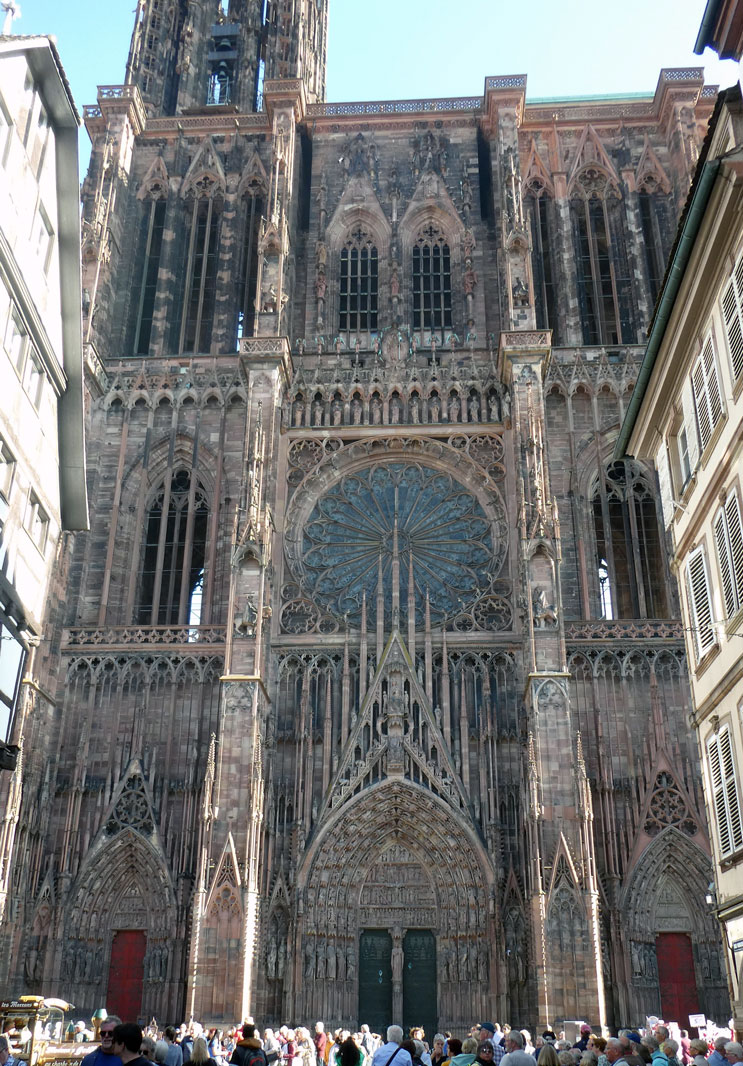
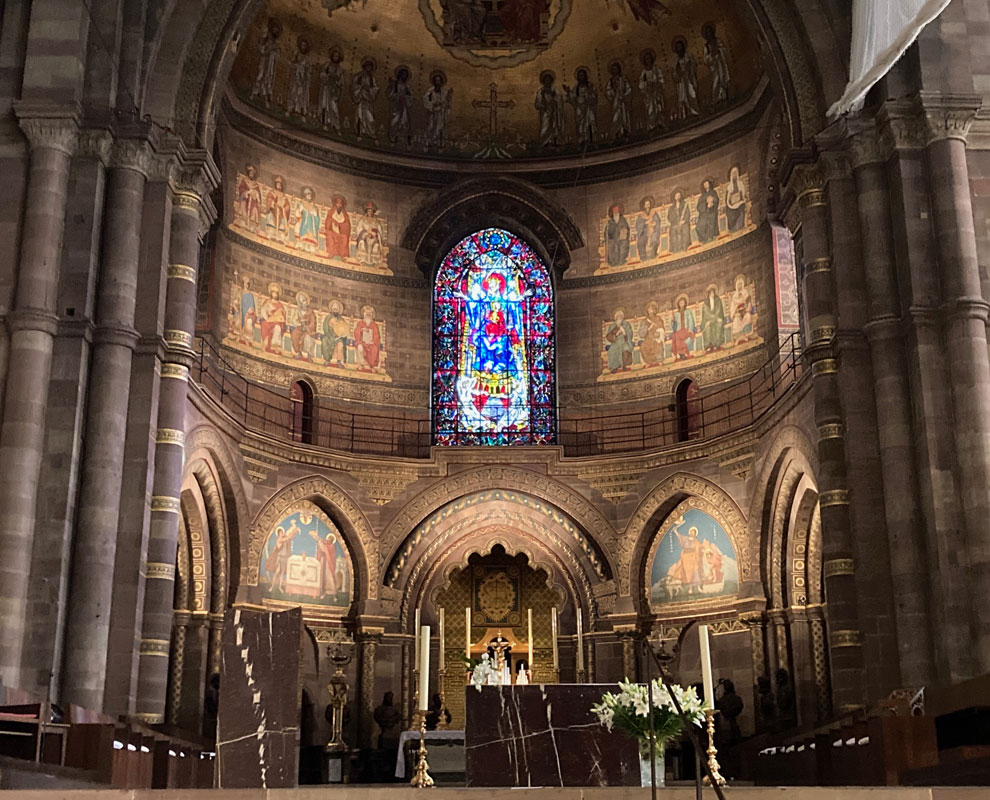
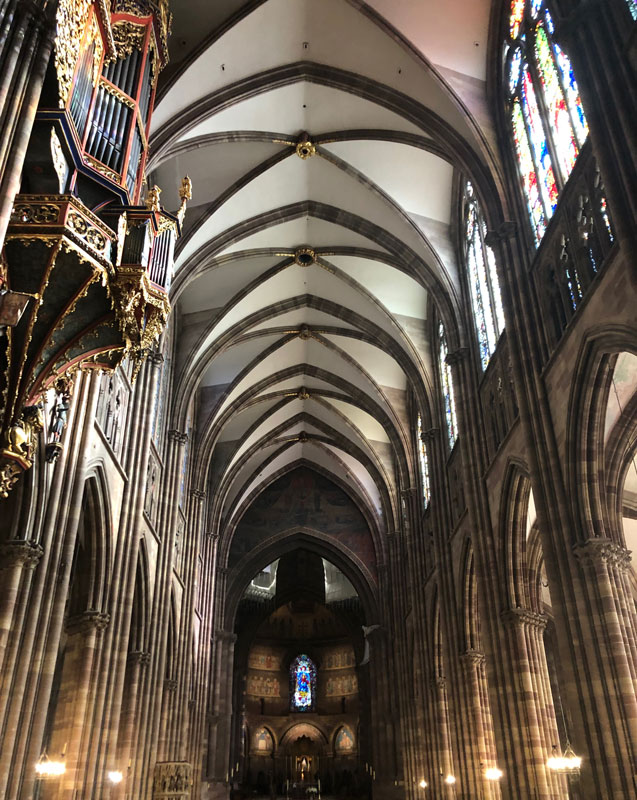
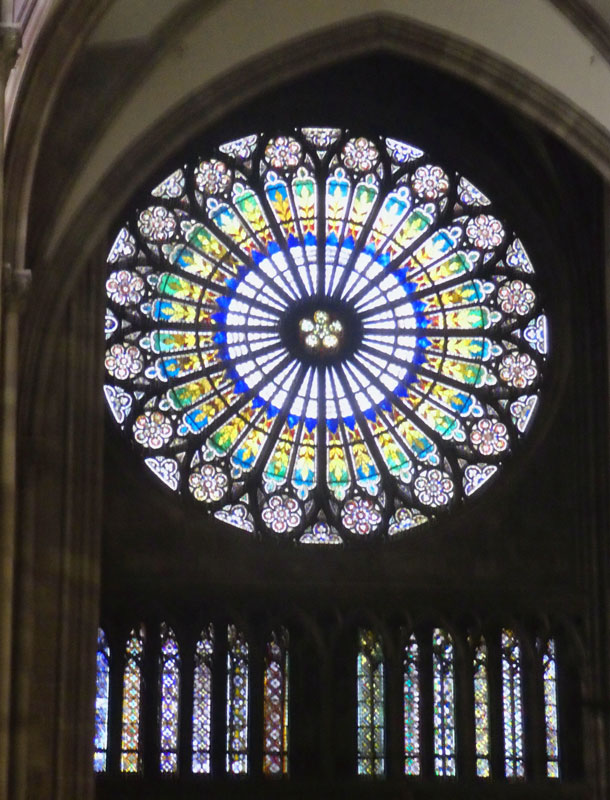
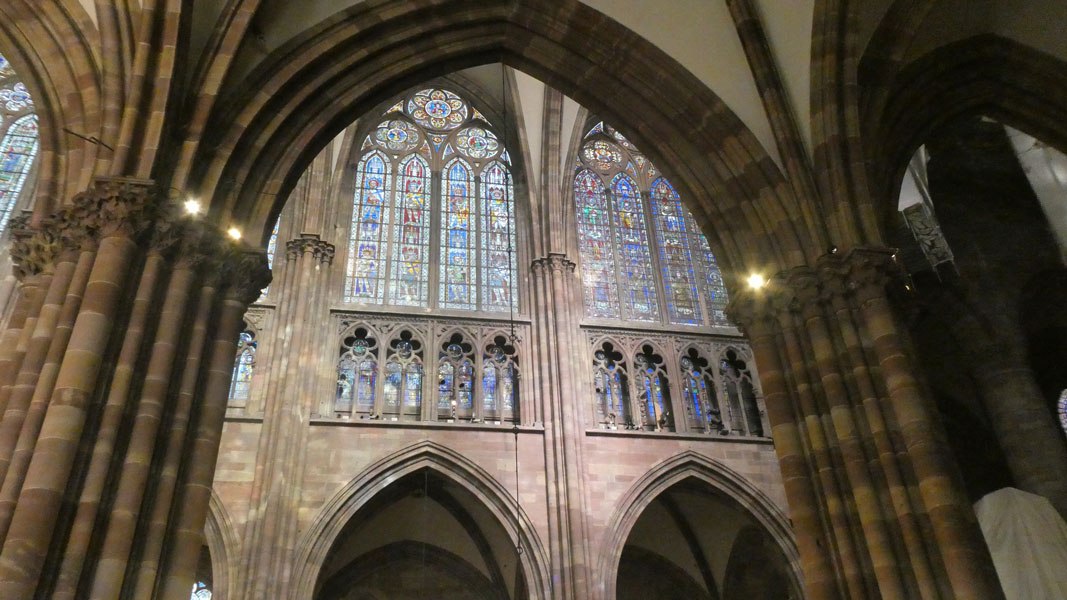
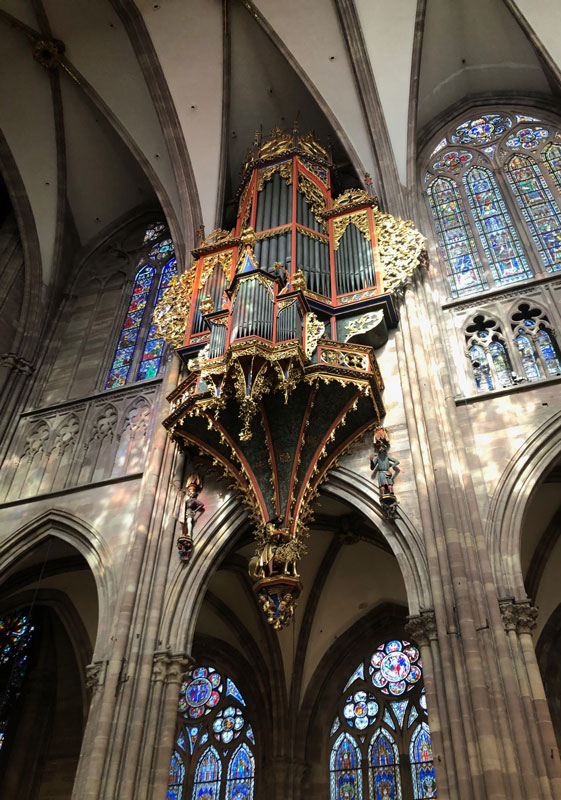
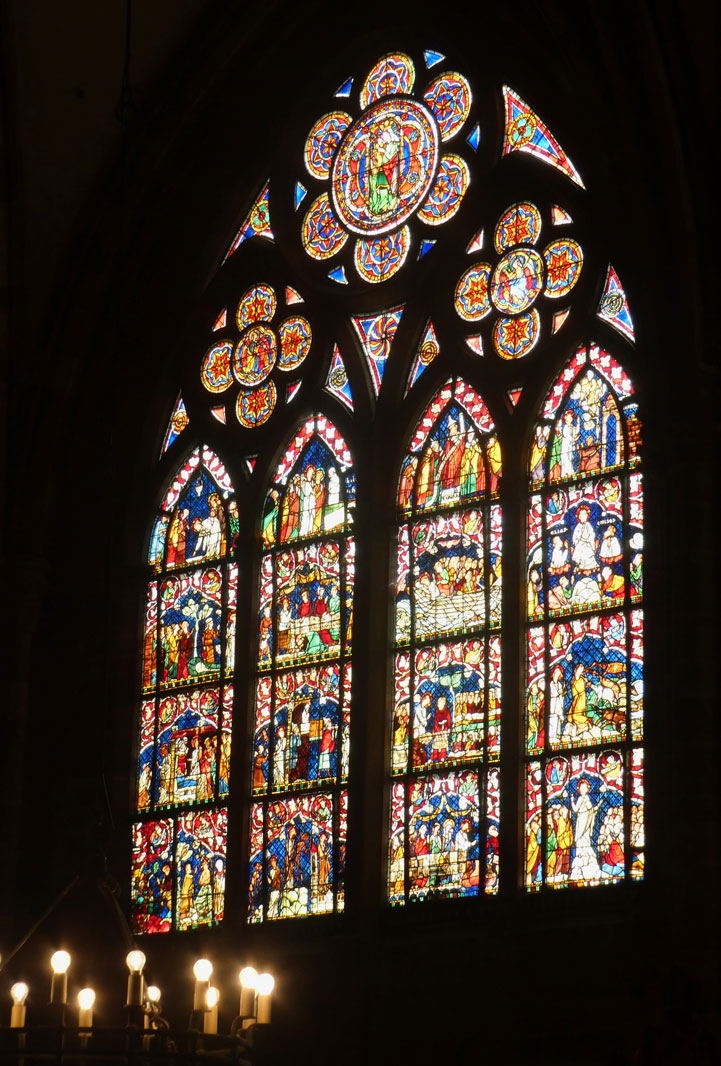
Back in the sunlight, we aimlessly stroll through the surrounding area until it’s time for all four groups to gather together and be led to a nearby hotel for lunch. Afterwards, the rest of the day is our own until it’s “All aboard” for our ship’s sail-away.
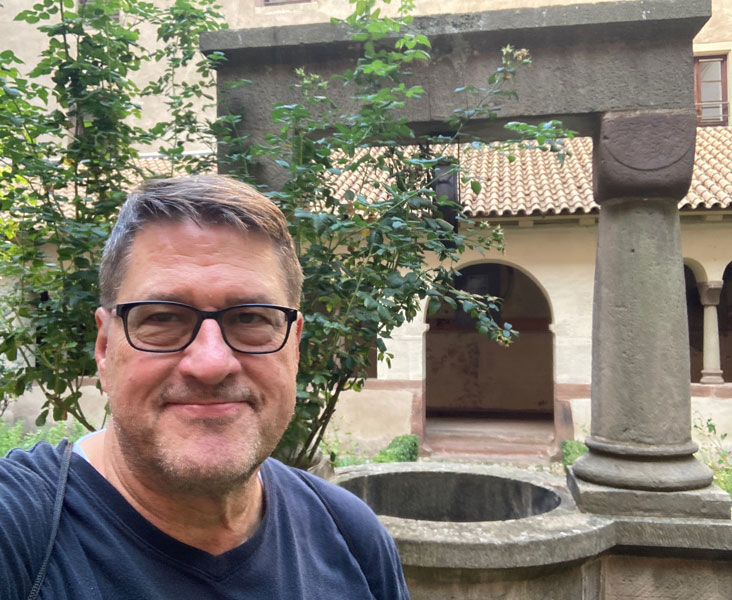
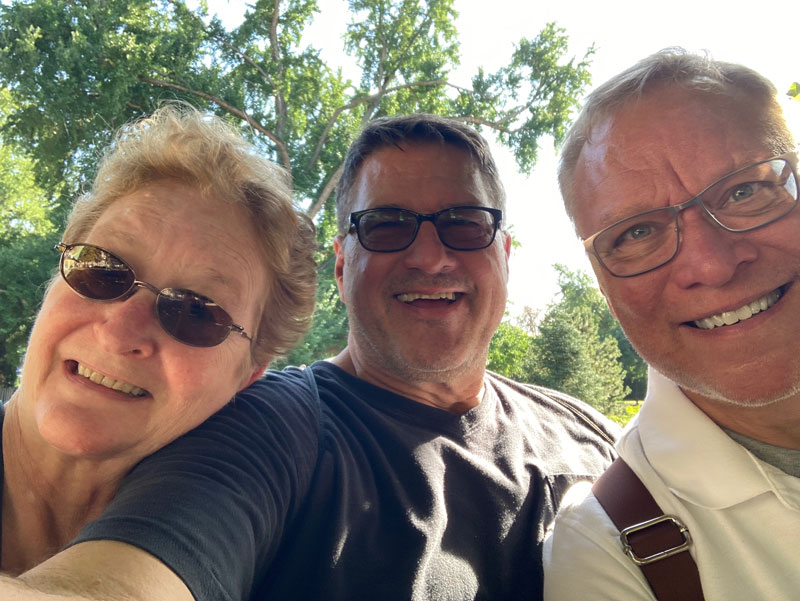
We three ventured into a church adjacent to the hotel that was highly recommended by our Program Director. It was very old and dark within, and they charge for taking photos! But beyond the sacristy, there was a slightly-overgrown but quiet cloister with a former well that gave me a few moments of peace and tranquility away from the hustle of Strasbourg.
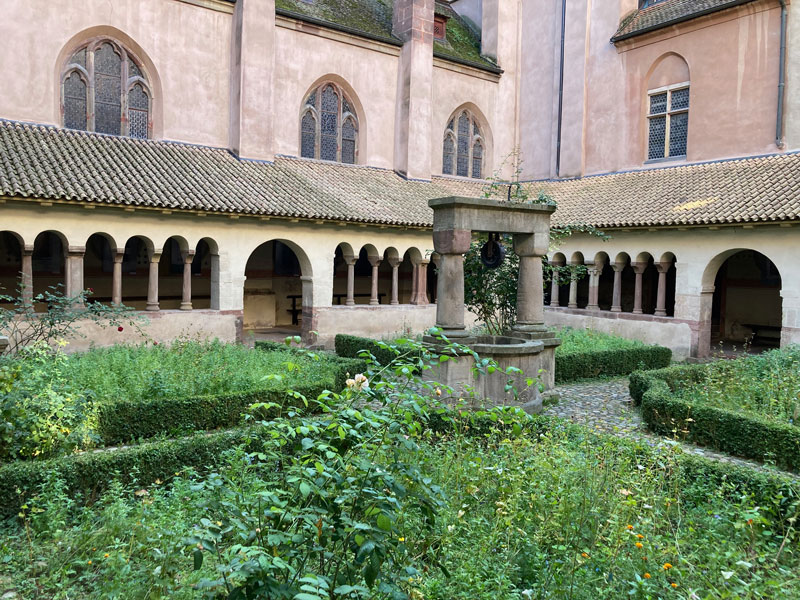
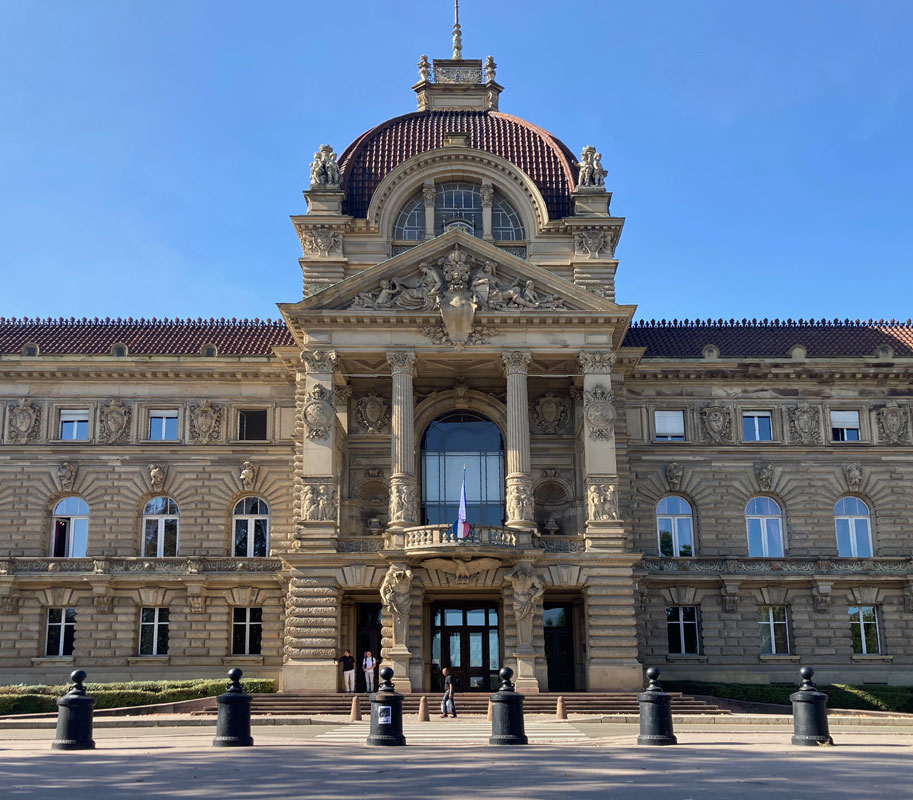
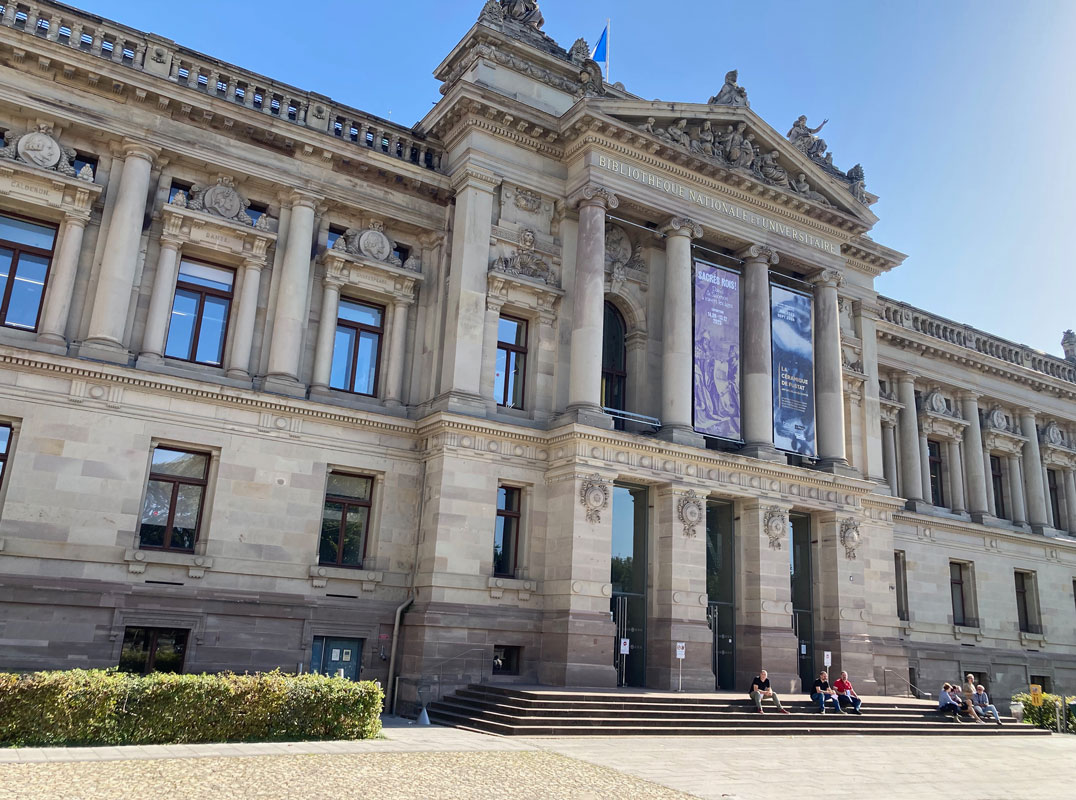
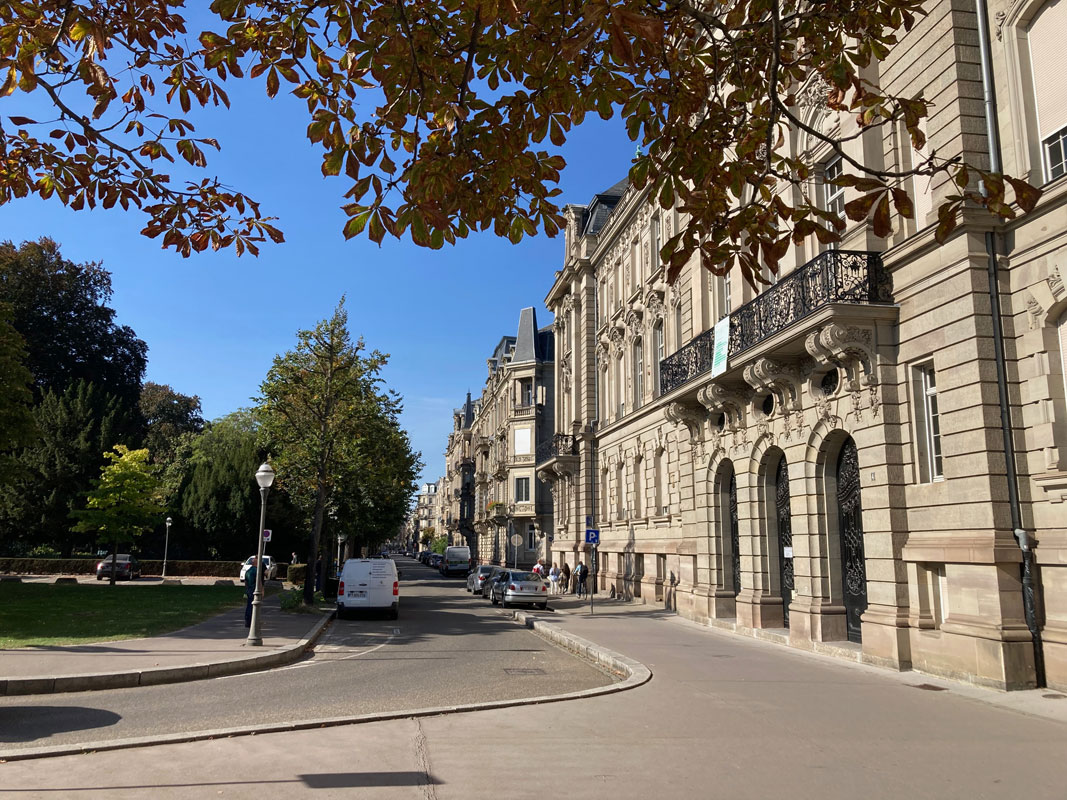
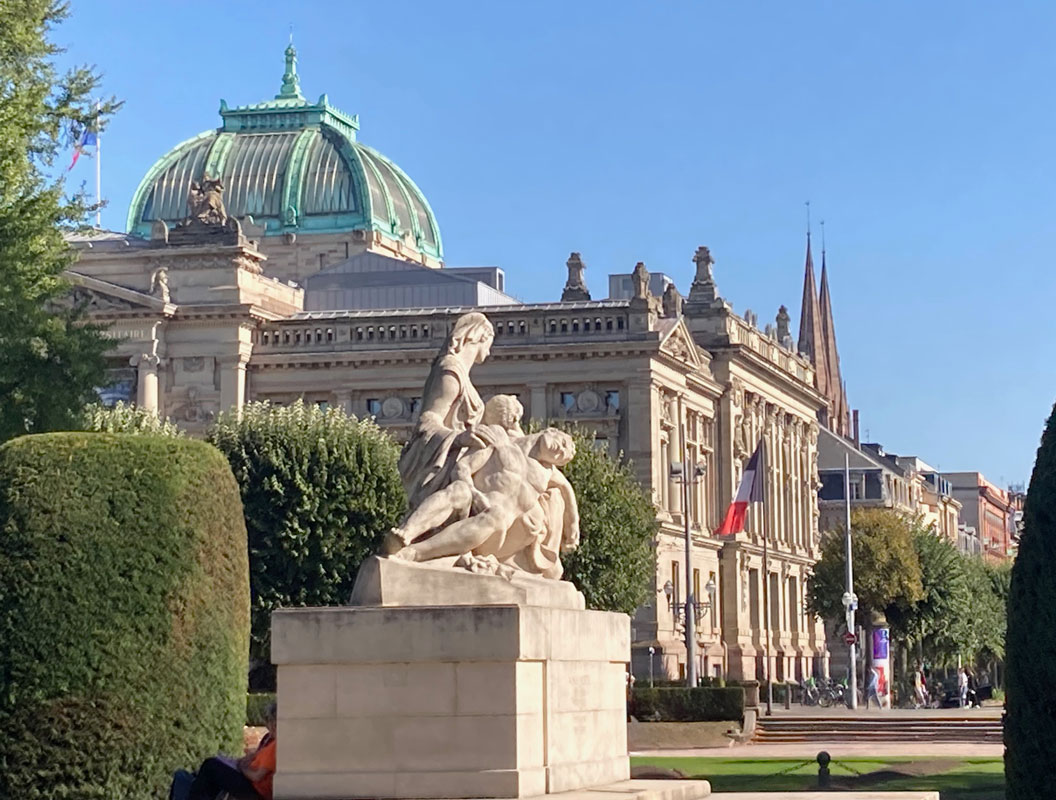
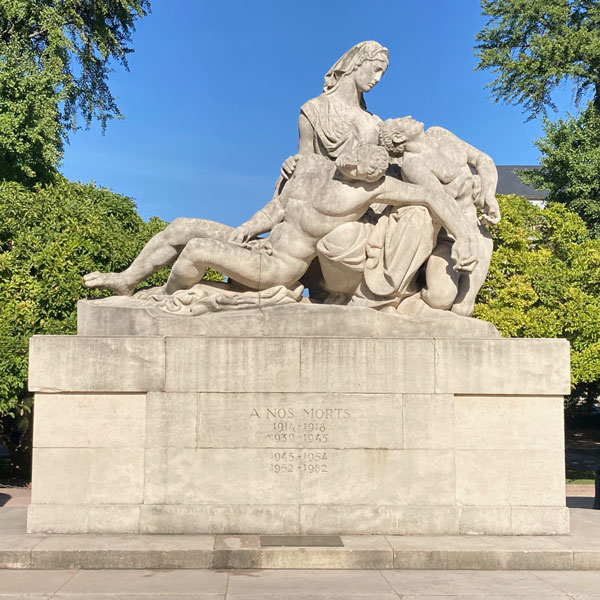
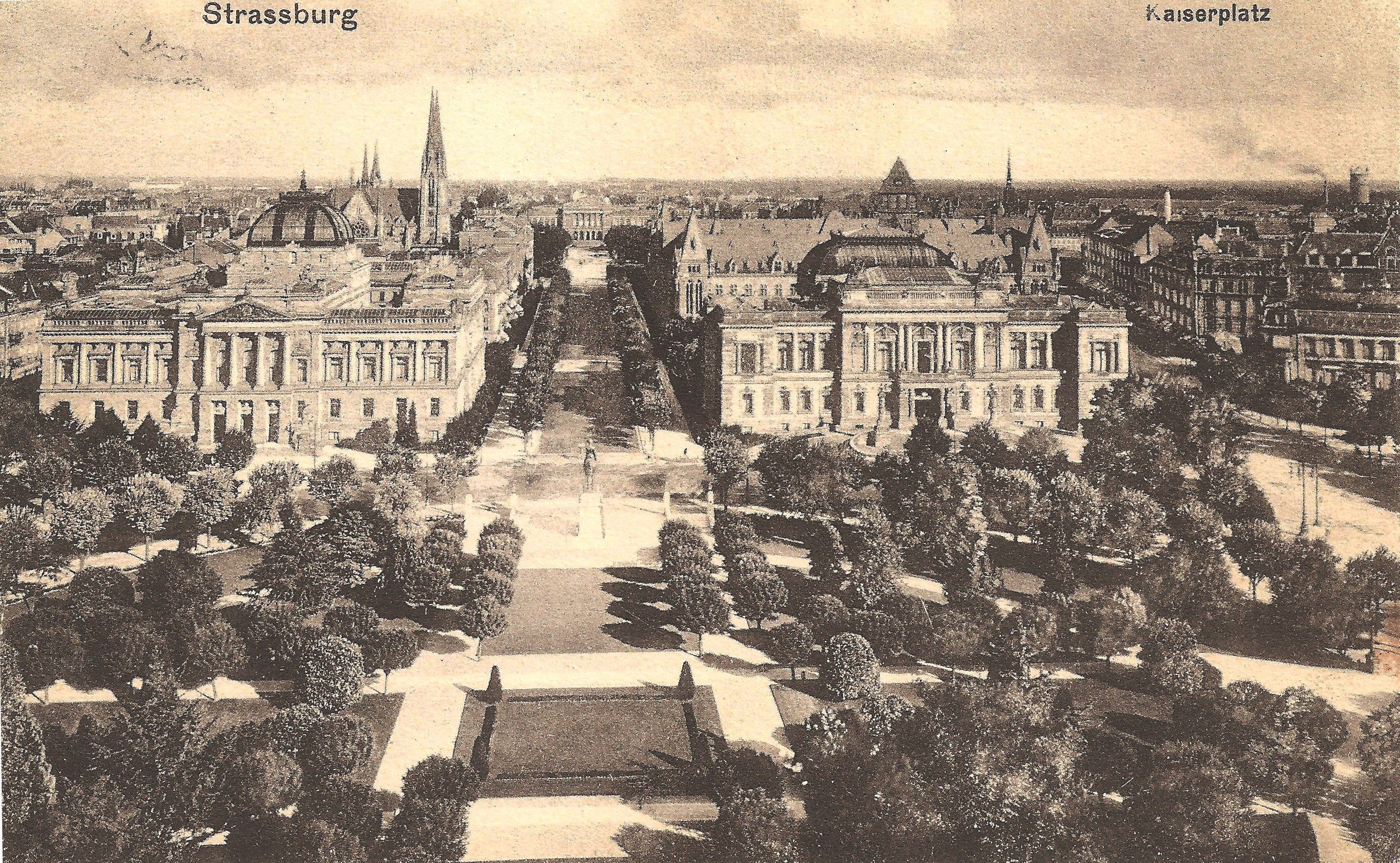
Our visit to Strasbourg was coming to a close. But there was one location we had ridden through on the tram into town that looked intriguing, the Place de la République. We hopped off the tram to check it out. Anchored by a large landscaped park criss-crossed with walkways, the Place is surrounded on three sides by monumental Neoclassical buildings culminating in the Imperial Palace (or Kaiserpalast), a landmark of 19th-century Prussian architecture.

Our curiosity sated, we hopped back onto an outbound F tram and returned to our ship.
 Romance of the Rhine & Mosel
Looks like you are having a great time! That cathedral is breathtaking.
Terri
LikeLike