
SOME PRE-TRIP STUFF
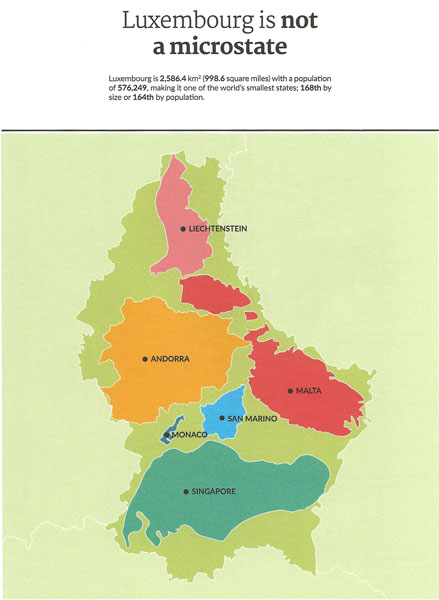
Today, we are taking an all-day excursion to the small-but-by-no-means-microscopic country of Luxembourg. Yes, the country is a small one…but as the attached graphic illustrates, it is the giant among dwarfs. It’s big (read: important) enough to be a member of that tripart European politico-economic union, the Benelux countries. (Do you remember that from grade school?) In fact, the included letters from its name comprise more of the BeneLUX portmanteau than the other two. Now that’s big-league for ya!
But the primary drive for this side trip is the fact that you rarely hear of anyone, other than Miami U exchange students, making Luxembourg their “destination.” So we’ve gotta go see what none of the fuss is all about.
Two full busloads of fellow travelers signed up for the excursion to Luxembourg City today. It took a little over an hour to reach the city proper. Then, we were off on our locally-guided walking tour.
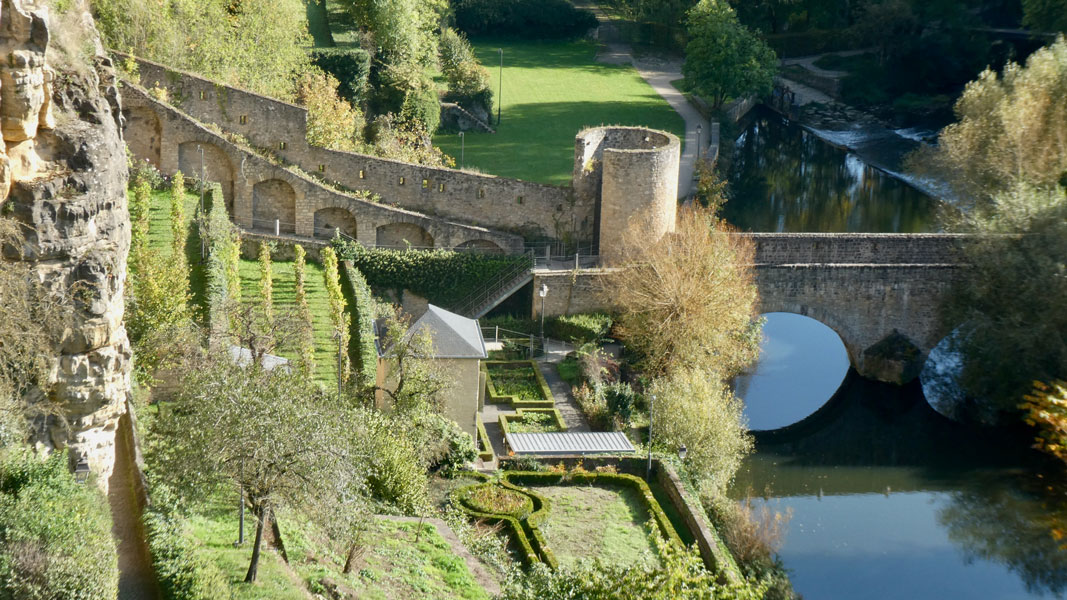
We started by crossing the Adolphe Bridge, once the record holder for longest single-span arch, as it crosses over the Pétrusse River valley that separated us from the central city. Remnants of the defensive walls were visible rising up from the valley below.
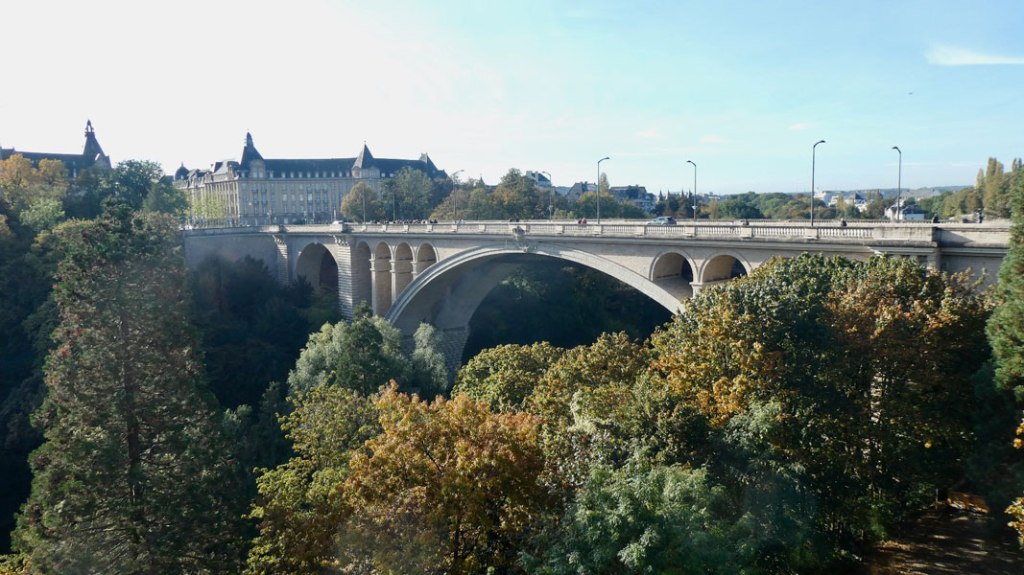

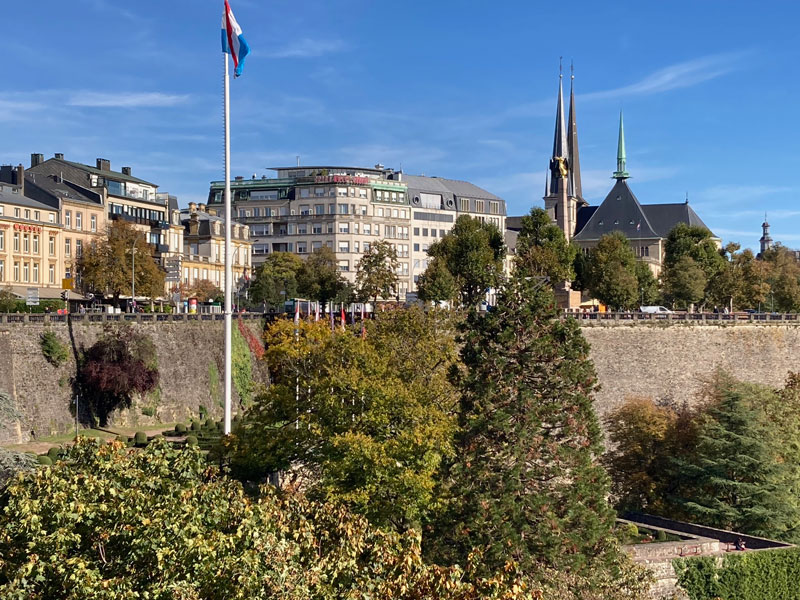
“Fortress of Luxembourg” was once described as the Gibraltar of the North due to her nearly-impregnable circle of defensive walls. Its defeat eventually came when, after an extended siege that exhausted their supplies, the city was forced to surrender to the French. In the 19th century, a treaty was negotiated in which the fortifications were to be destroyed and the city was to become perpetually neutral. Now, the old ramparts are a huge tourist draw.
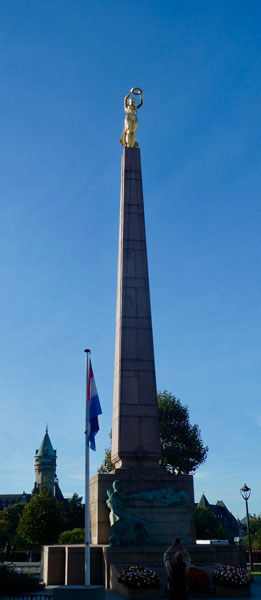
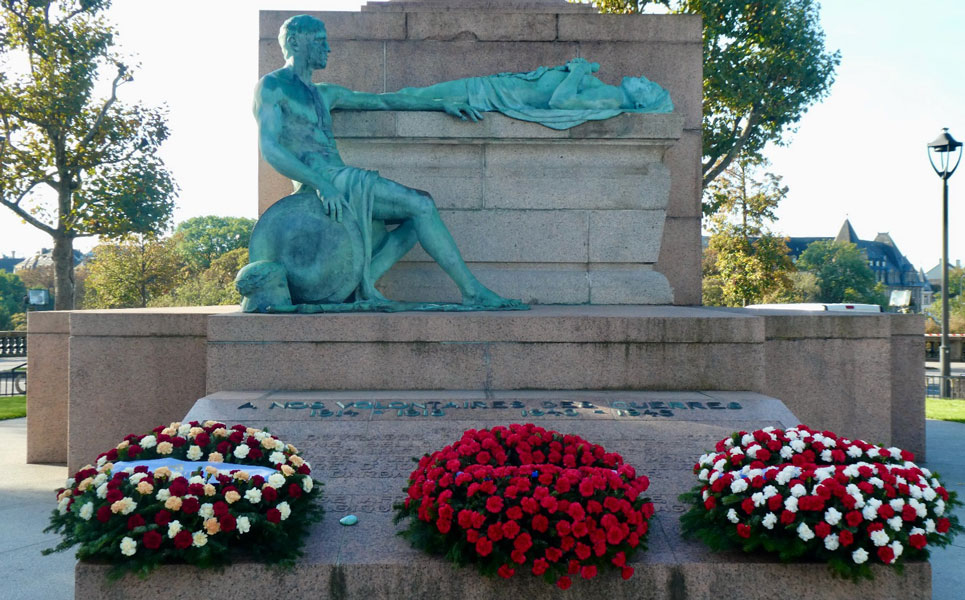
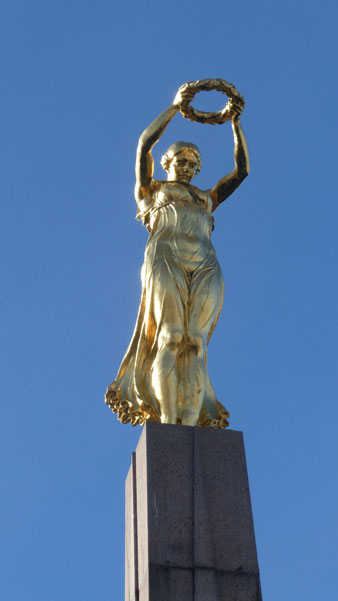
Once across, the historic narration continued as we walking along the valley’s edge, admiring the views before reaching the Monument of Remembrance, affectionately nicknamed the Gëlle Fra or Golden Lady. It is dedicated to the thousands of Luxembourgers who volunteered for service in the armed forces of the Allied Powers during both World Wars and the Korean War. Luxembourg does not have its own standing army due to negotiated treaties.
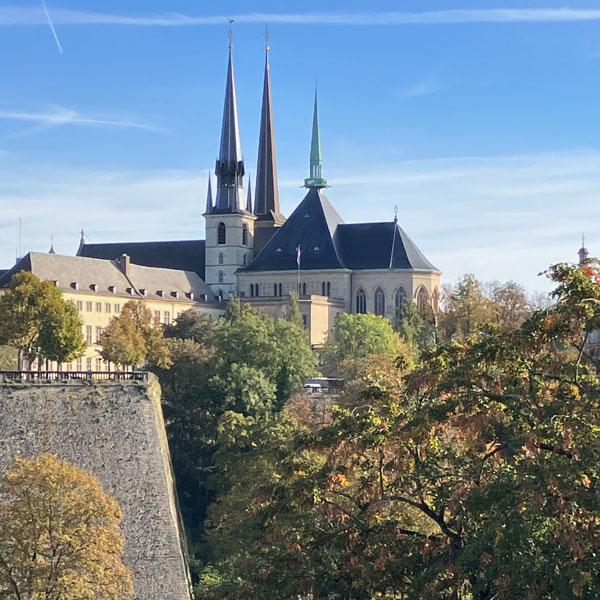
Next stop: Notre-Dame Cathedral. Originally built by the Jesuits to serve as their college church, it was elevated by Pius IX to be the Catholic Cathedral of Luxembourg City.
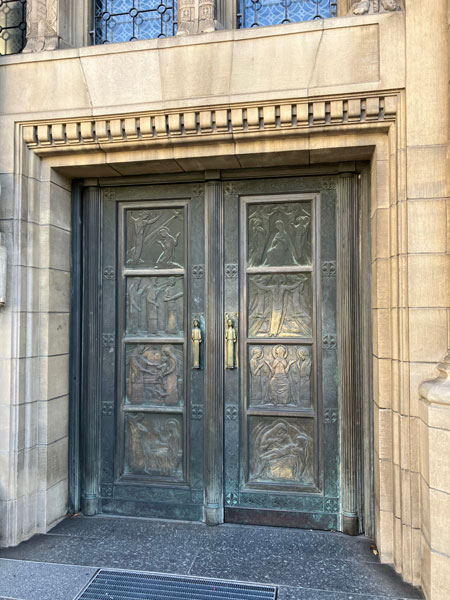
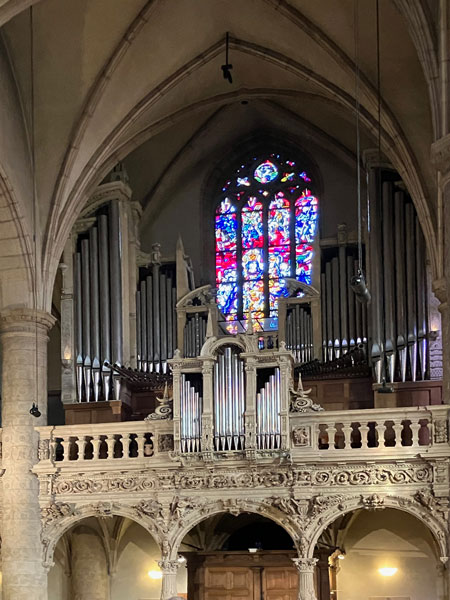
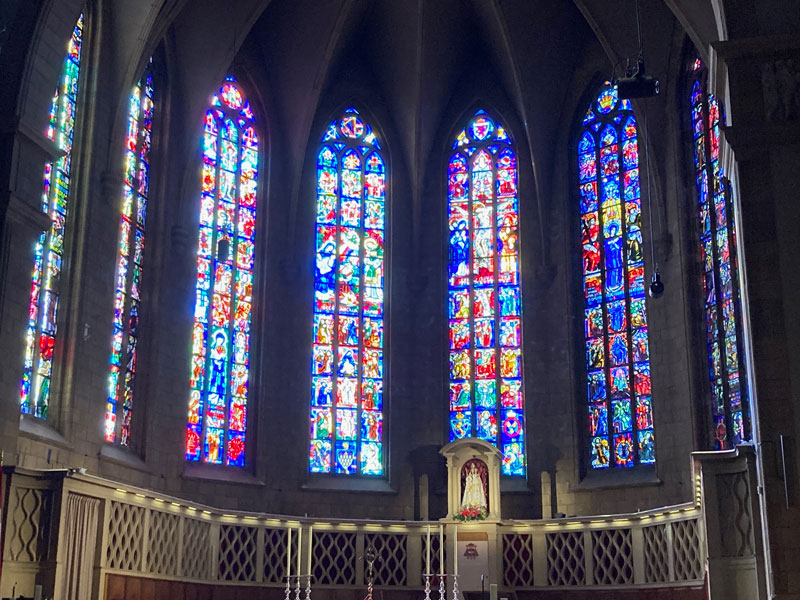
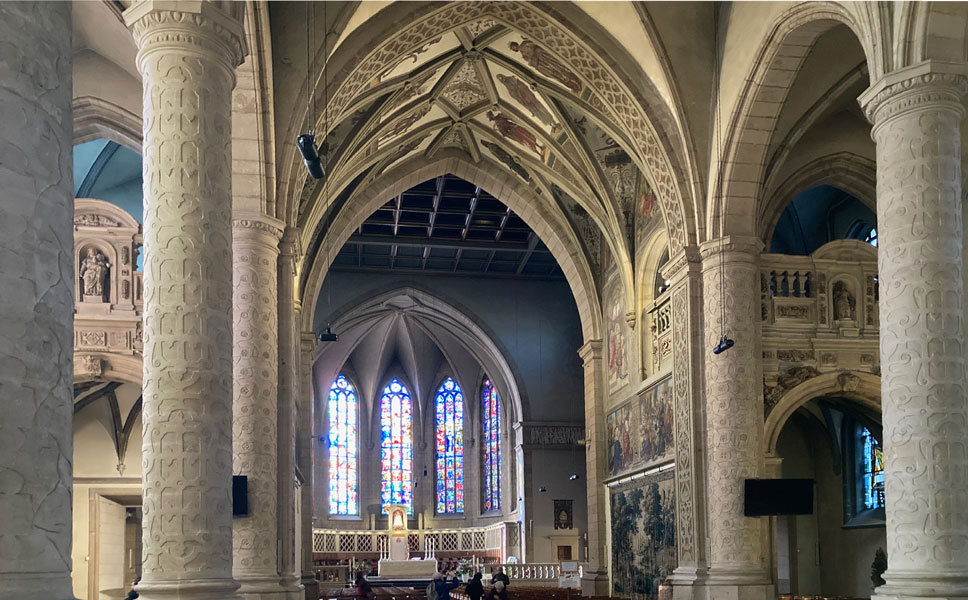
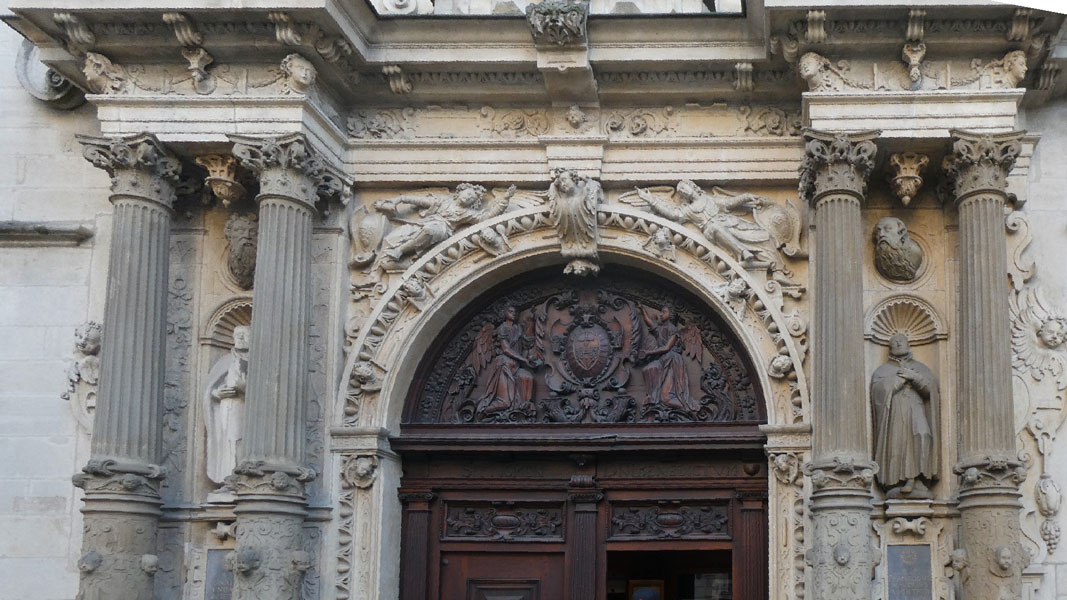
Leaving the church, we began to weave our way through the city (and a lot of construction) to various points of interest. Here are some of the sites seen on our journey sans exposition.
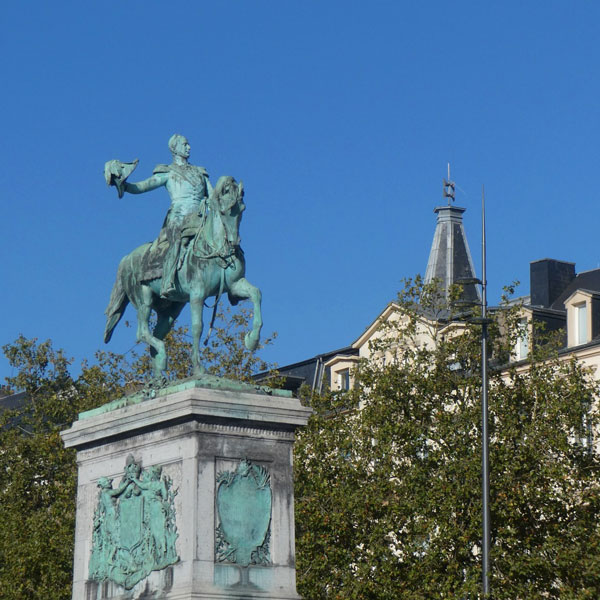
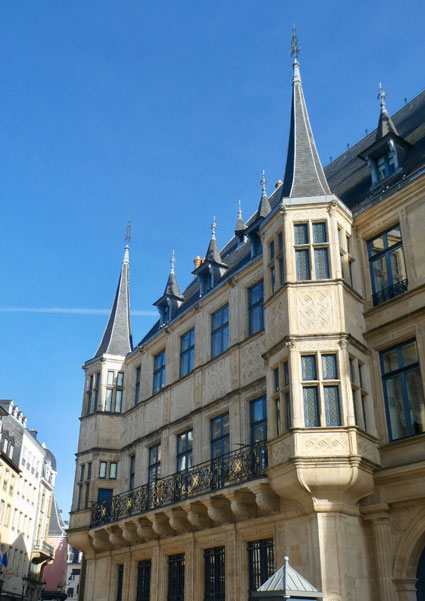
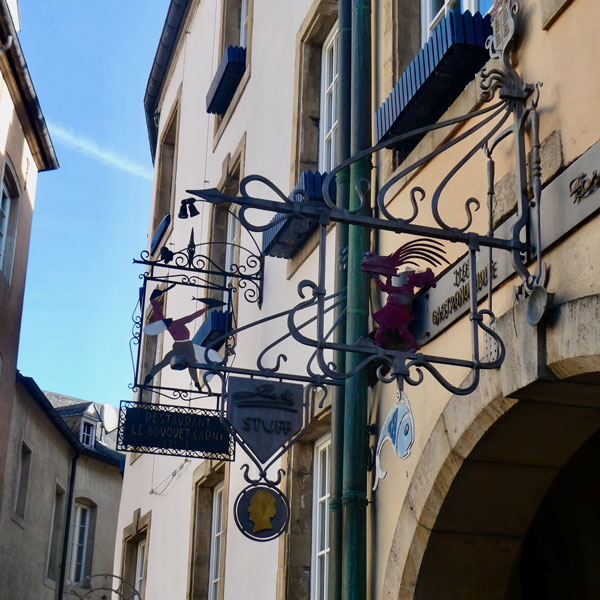
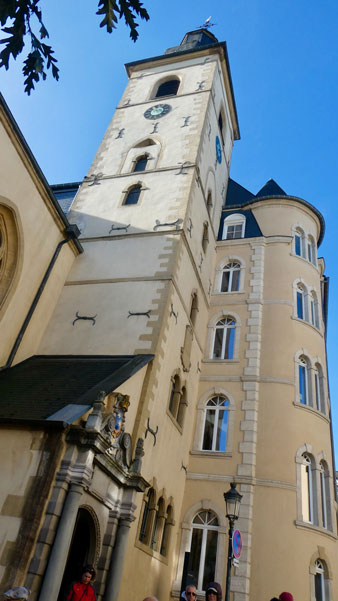
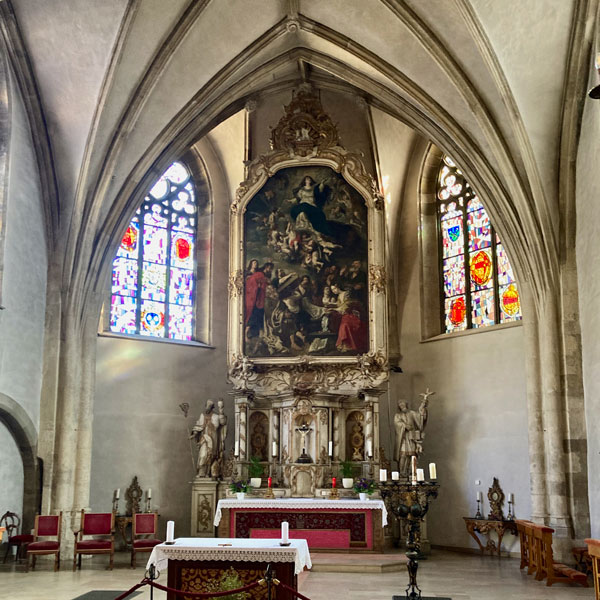
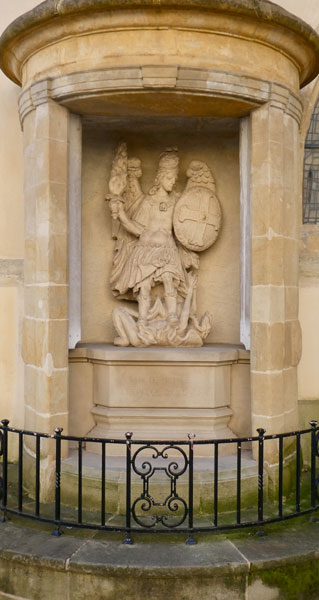
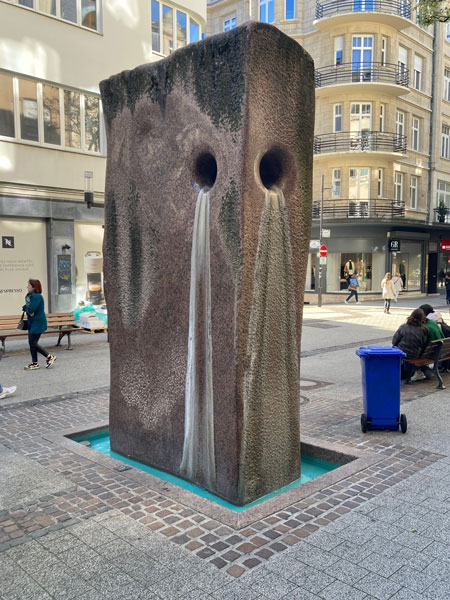
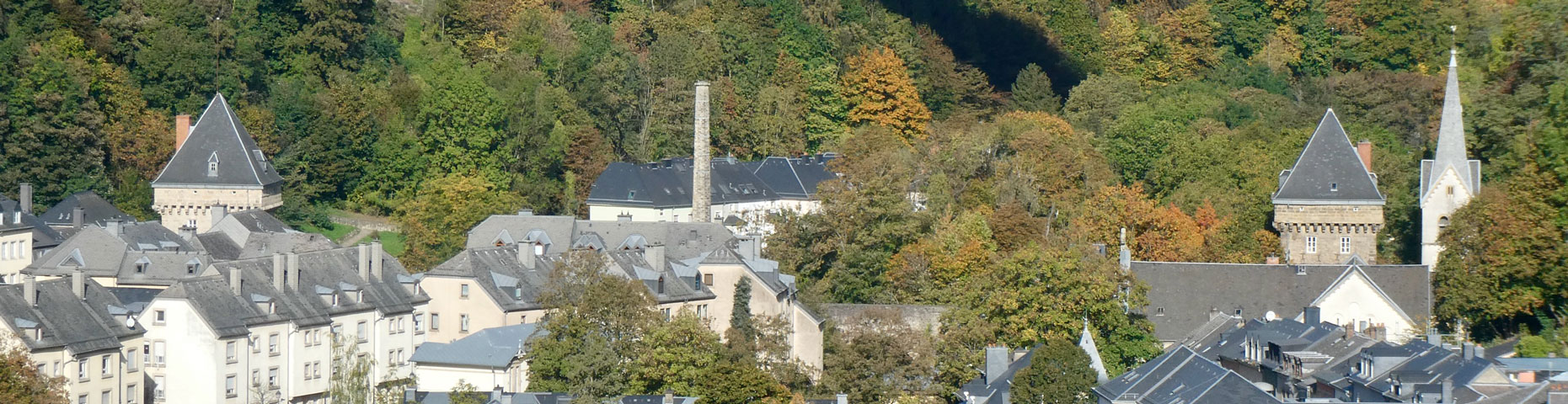
The last part of our walking tour returned us to Le Chemin de la Corniche, also called the “Most Beautiful Balcony of Europe,” built upon the remaining ramparts of the dismantled fortifications. The views from there and an adjacent viaduct were splendid.
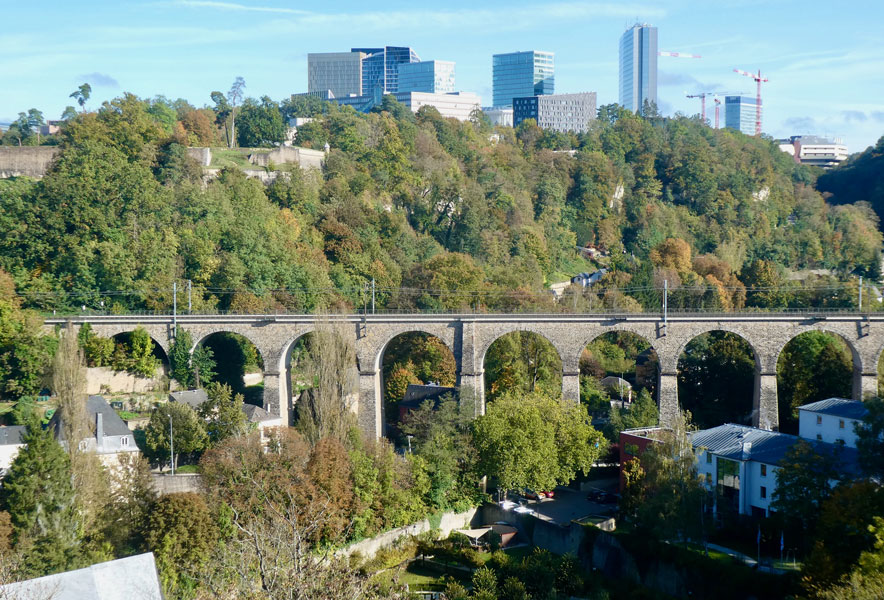
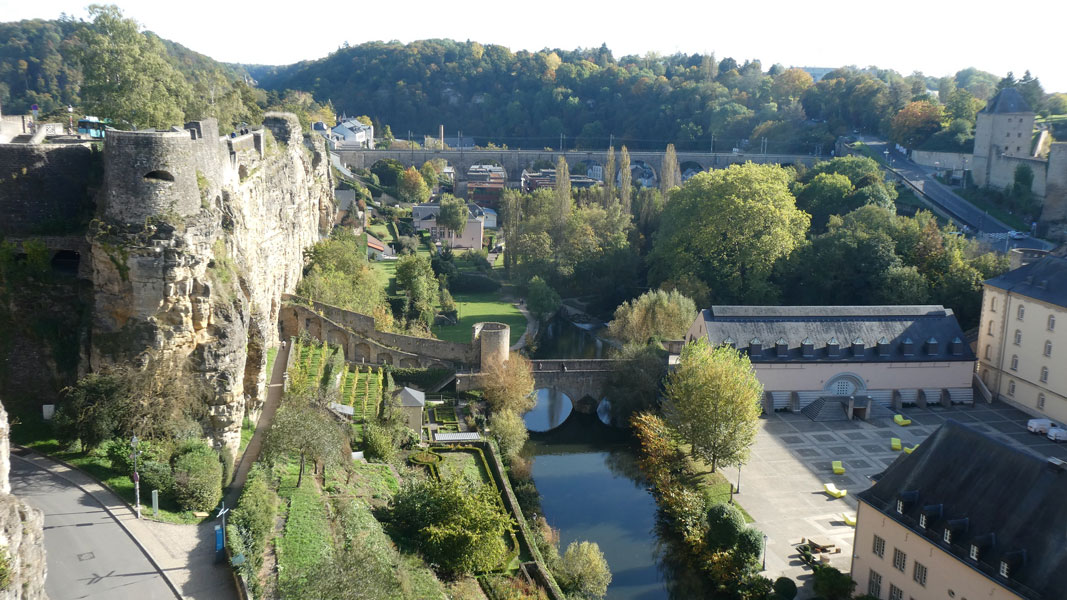
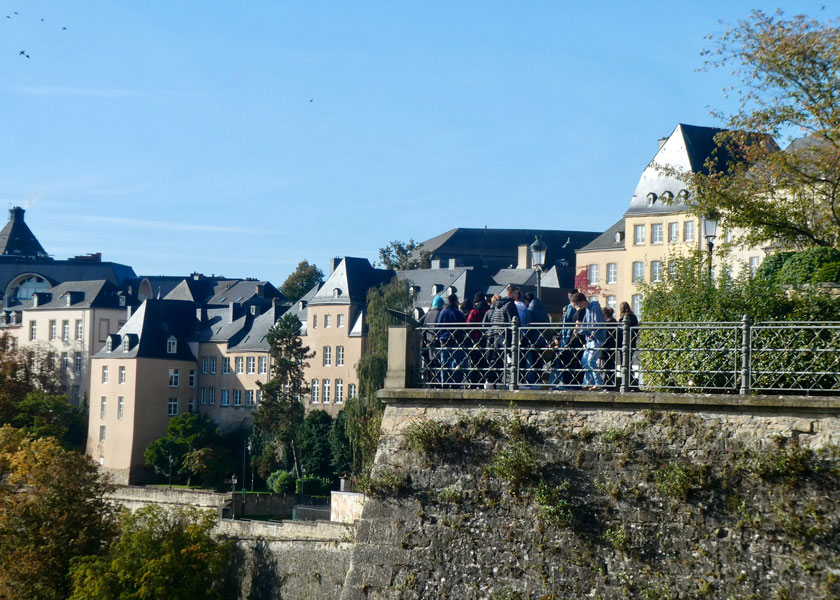
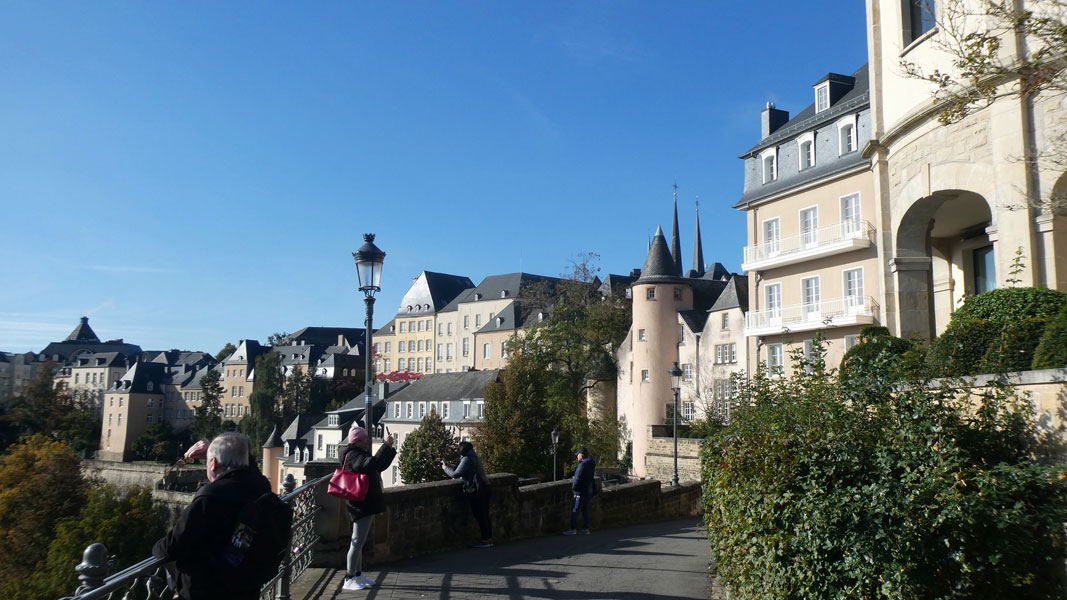
It was now approaching noon. Lunch was being served in a restaurant on the Place d’Armes (across from McDonald’s, as a matter of fact.) So we bid adieu to our local guide, put the sightseeing behind us and headed to the restaurant for refueling and other natural necessities. The delicious lunch (Quiche Lorraine) was followed by some free time to explore the pedestrian-only shopping and dining district of the city before regrouping for our next destination.
Rob and I did a little shopping for the only souvenirs we now seek on our journeys: a Christmas ornament as a travel memento. (Our memories need a little reminder sometimes!) I also sought a bookstore, hoping to find an edition of Pride and Prejudice in Luxembourghese. We found a great store–but the clerks informed me that no such translation existed. “But there is one of The Little Prince!” she informed me. With one win and one loss, we opted for a local brew at a small but very busy establishment before meeting up with our groups and proceeding to the buses for our next stops.
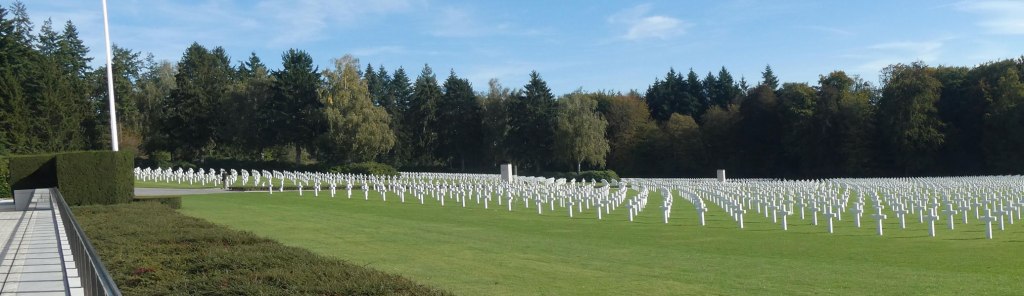
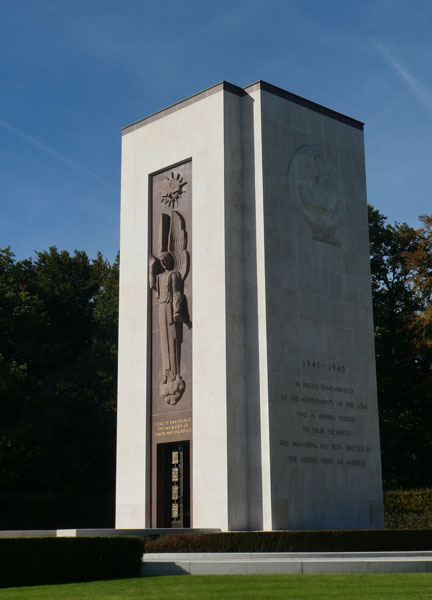
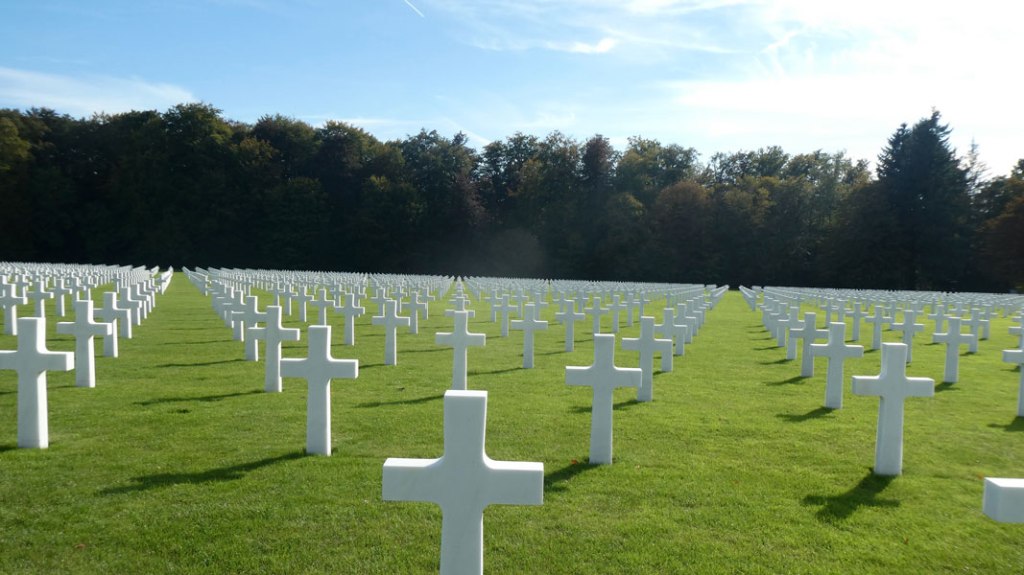
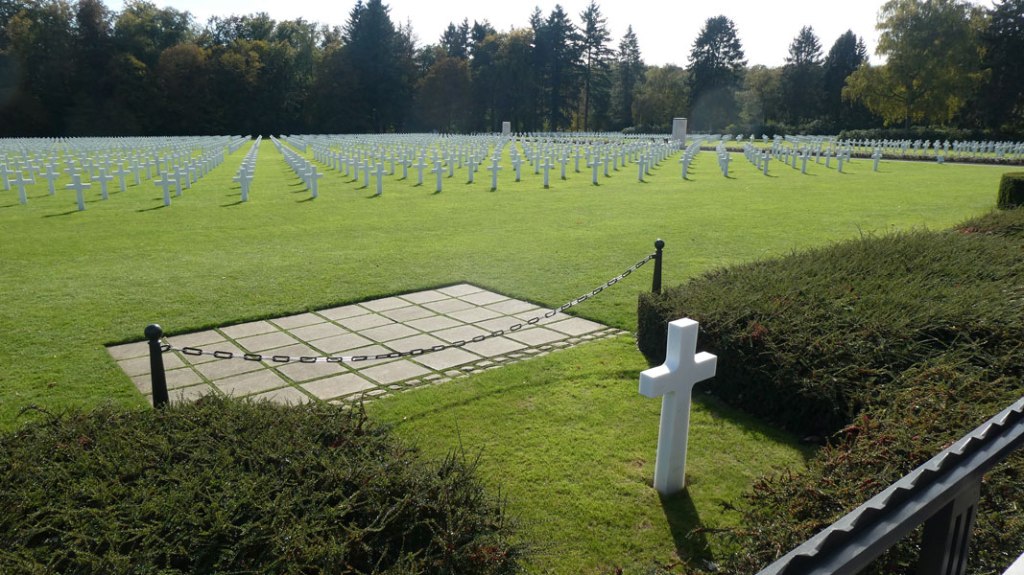
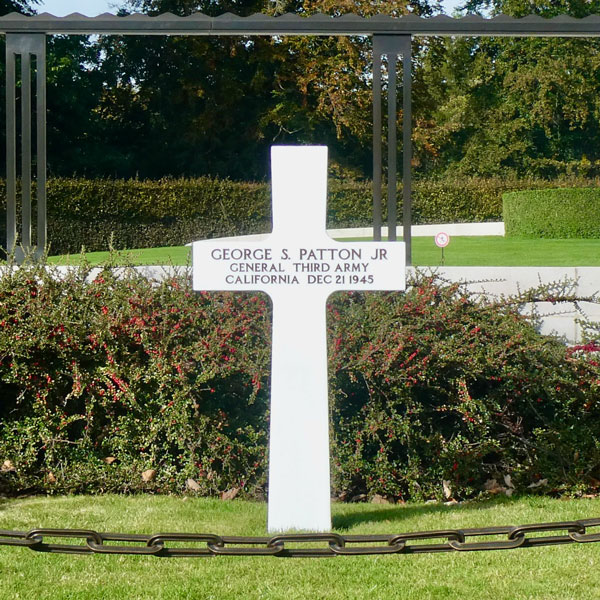
This was Rob’s and my third visit to an American cemetery during a GCCL cruise. They are always a moving experience. This one, which is very much tied to the American casualties suffered at the Battle of the Bulge, was no different. Seeing George Patton’s grave and hearing the story behind how he came to be buried here (He is.) was fascinating sidebar.
One minor spoiler, though, was the landscaping work being performed. Mowers, clippers and blowers were in use the entire time we were there, not even pausing for the brief ceremonial laying of flowers and the playing of taps and the national anthem. (Unlike a similar visit at the Normandy D-Day cemetery where every person in the much-larger cemetery, not just our group, paused and remained silent for the same type of memorial service.) I blame it on the US Secretary of the Treasury, Janet Yellen, who was scheduled to visit the cemetery right after we departed.
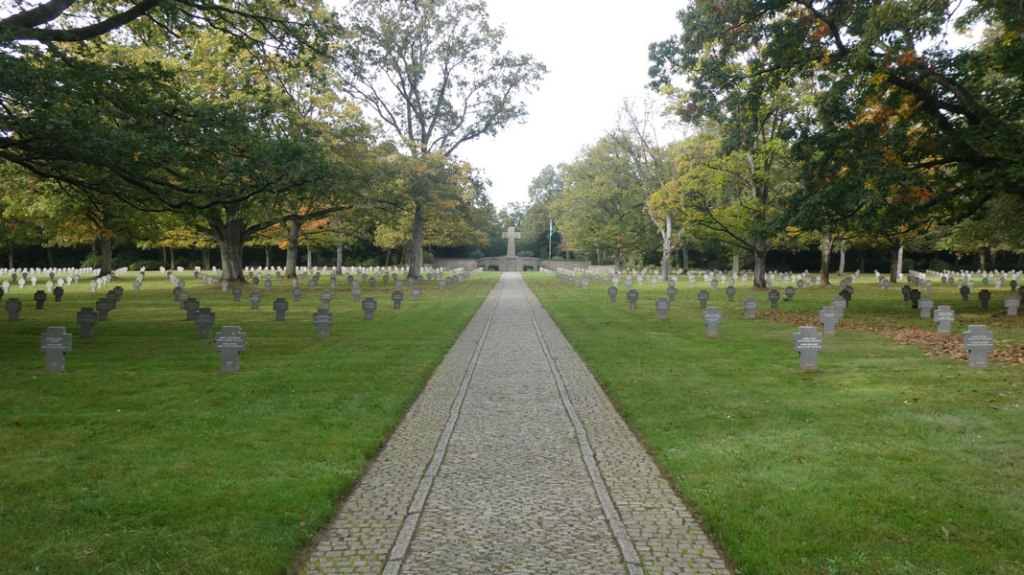
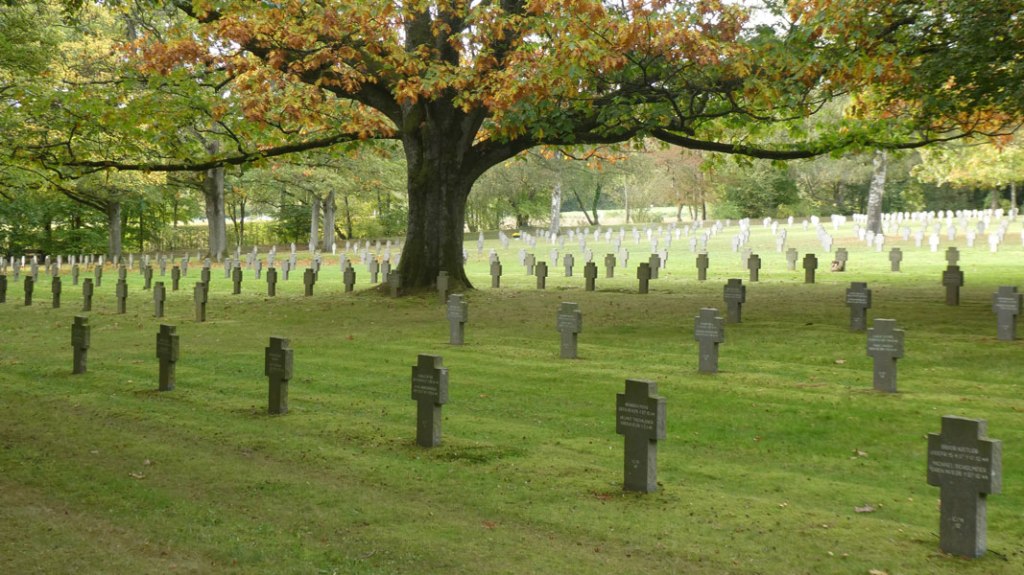
Before making the drive back to Bernkastel where the boat awaited our return, we made a brief stop at a nearby German military cemetery as well. Set back in a forested area, there is one tombstone for every four soldiers’ graves with two names on each side. A large carved cross at the end of a stone path the divides the cemetery in half, marking the mass grave of 6,000 others. The creation of this cemetery was due to the insistence of US soldiers that everyone, enemy or not, deserved the dignity of a decent burial.
The Luxembourg American Cemetery and Memorial
The German Military Cemetery
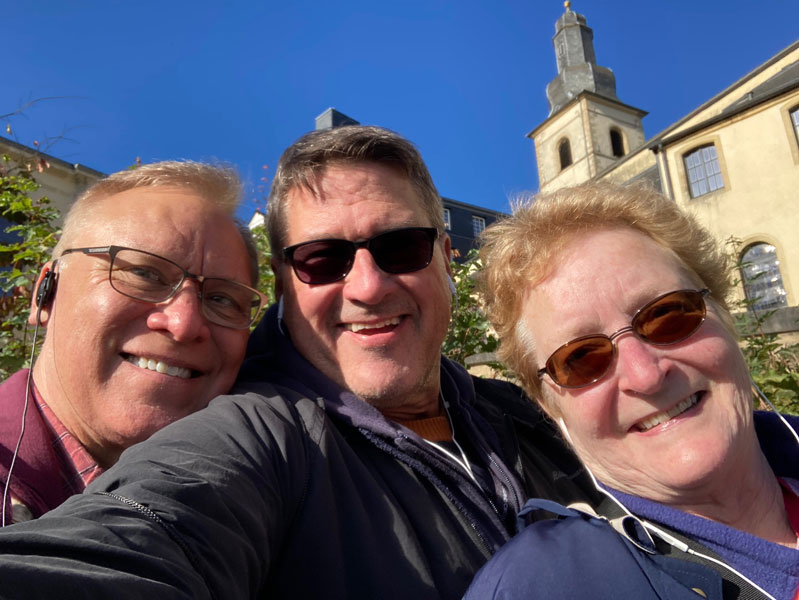
Doubly-somber’d, we returned to the ship.
 Romance of the Rhine & Mosel
Yes, a moving experience.
I appreciate your photographs.
❤️ Nini
LikeLike